Tuesday, February 9, 2016

Essential Facts of Sanatana Dharma

Essential Facts of Sanatana Dharma
Sometimes people ask what Hinduism is, and how it compares with the other religious/spiritual traditions of the world. Most of the time Hindus find it difficult to provide simple and cogent answers to such questions, which can make other people doubt the validity of Hindu dharma.
I have compiled the following information highlighting key points that can be used to show to the uninformed person what Hindu Dharma truly is, and all the factors that it relates to, which go far beyond what other religions normally address.
The vastness, abundance and diversity within Hindu Dharma is a strength rather than a weakness, and places it far above more circumscribed beliefs. But this diversity needs to be explained properly and in detail for people today to understand, particularly for those coming from the background of western education or western religions who may have many misconceptions already.
Each of these paragraphs can be used as a basis for discussion.

Place of Hinduism among the Religious and Spiritual Traditions of the World

Hinduism is the oldest continuous religious and spiritual tradition in the world, going back over five thousand years, with no specific point of origin historically. It is connected more with cosmic time cycles and eternal truth than it is with any historical person, revelation or community.
Hinduism is the third largest religion in the world with over a billion followers worldwide, comprising about one in every seven people on Earth. It has been one of the largest followed religions since its inception long before the other major world religions came into existence.
Hinduism is the largest of the non-Biblical and non-Abrahamic traditions, with only Christianity and Islam having more followers today. As such, it represents the non-Abrahamic religious movements of humanity, of which Biblical monotheism is only one.
Hinduism is the largest and oldest of the Dharmic traditions, comprising Hinduism, Buddhism, Jainism, and Sikhism and related spiritual traditions of India and Asia, which emphasize the pursuit of truth over any creed or dogma. More religions have originated in India than in any other country in the world.
Hinduism is the largest of the so-called pagan traditions, such as existed before Christianity and Islam arose, like the older European and Middle Eastern traditions, including the Greek, Roman, Celtic, Germanic, Slavic, Persian, Babylonian, Egyptian and many more.
A number of these pagan traditions have survived and several are being revived today. Hinduism can help in this renewal process as its continuity has remained unbroken.
Hinduism is the largest of the native and indigenous traditions of America, Africa, Polynesia and other parts of Asia, including many oral traditions, which are rooted in nature and the Earth rather than any human revelation. Hinduism encourages the preservation of native traditions and can help us understand the deeper spiritual meaning of their rituals and view of the sacred.
Hinduism, though primarily found in India and Nepal, historically has spread throughout Central Asia, Indochina and Indonesia, and aspects of Hinduism came with Buddhism wherever it went as far as Japan, which still has many temples to Hindu deities today.
Hindu and Vedic related traditions from the Zoroastrian to the Greek, Roman and Celtic spread west through the Middle East to Europe in early ancient times. The largest traditional Hindu temple complex is Ankor Wat in Cambodia, showing that Hinduism is not just an India based but a universal and global tradition.
Hinduism is the largest of the world’s pluralistic spiritual traditions, honoring many paths to God or truth, and many names and forms of the Divine. Hinduism therefore easily blends in with pluralistic social traditions, such as found in democratic traditions today.
Hinduism is a dharma or way of truth that places individual spiritual practices through ritual, Yoga, mantra and meditation over any particular belief, faith or institution. In Hinduism truth is even more important than God, whose best definition is the eternal truth.
Hinduism is not a local formation or limited to one community of believers or practitioners. It calls itself as Sanatana Dharma, the eternal and universal truth that is relevant to all beings and arises from the cosmic mind itself.
Hinduism is beyond all views of monotheism or polytheism, teaches us to see the Divine in everything as the power of universal consciousness. Hinduism cannot be put into the straightjackets of western theological thought.
Hinduism formulates itself as Manava Dharma or a teaching for all human beings. It has never divided humanity into believers or non-believers, or one religious community as against another. It has never rejected any portion of humanity as condemned by God or the Divine, but teaches that all living beings must eventually return to the highest state of bliss.
Hinduism has the greatest number of followers regularly engaged in pilgrimage of any religion in the world. The Kumbha Mela is world’s largest religious gathering and has been for many centuries, with as many as thirty million participants on a single day. Local Hindu festivals throughout India commonly see hundreds of thousands of participants on a single day.
Hinduism has the largest number of temples and shrines of any religion, with numerous temple complexes and temple cities built over thousands of years, as well as many local and home-based shrines. It also has the greatest diversity of temples and shrines in terms of different types of construction, formation, forms and images.
Hinduism has the largest number of monks and priests of any religion, with extensive religious orders of Swamis, yogis and Sadhus, more than two million in India today. It also has the oldest set of religious orders, priests and gurus, with lines and lineages going back to before the time of Lord Buddha.
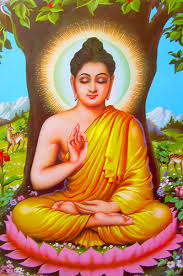
buddhaHinduism has the largest number of teachers, gurus and holy men and women of any religion. It emphasizes living teachers over teachers and prophets of old. Hinduism says that God-realization is the right of every human being.
Hinduism has a greater variety of religious and spiritual teachings than any other religion in the world. There are perhaps more religions inside of Hinduism than outside of it. These include even atheism and agnosticism.
Hinduism has more names and forms for the sacred and Divine than any tradition, including extensive traditions of iconic worship and formless approaches that use no murtis. Hindu deities routinely have chants to them of a thousand names. Yet Hindu dharma also honors the nameless and formless, the infinite and unbounded.
Hinduism has the most festivals and holy days of any religion, with some lasting as long as ten days. Hinduism has its own sacred calendar that directs us to spiritual practices on a daily basis and tells us the unique spiritual qualities of each day of the year.

Key Points of Hindu Philosophy and Cosmology

Hinduism is the most tolerant and syncretic of the worlds major religions. It does not aim at outer conversion but at inner spiritual practices, and regards the same One truth as capable of innumerable manifestations relative to different times, places and persons. Hinduism has both a universal orientation and a local adaptation.
Hinduism does not promote any single religious belief but rather encourages us to pursue the exploration of consciousness as our real spiritual quest. It places individual spiritual practices over any en masse belief.
Hinduism has the most detailed philosophy and psychology of any spiritual tradition in the world, with numerous systems of Yoga, Vedanta and Tantra, covering every angle of the spiritual life and quest for higher consciousness.
Hinduism recognizes that each individual soul can realize Divinity as one’s true Self and inmost consciousness, and does not regard as any teacher, messenger, prophet or savior as final. It teaches that your true Self and the universe are one.
Hinduism rests upon honoring each individual as Divine and all nature as sacred. It does not demand conversion, but directs us to understand and respect ourselves as we are according to our own inner being.
Hinduism is the most prominent spiritual tradition in the world emphasizing Self-knowledge gained through Self-inquiry over any person, form, name, book or deity. It regards religious or spiritual practice as various approaches to Self-realization, not as ends in themselves. It understands our true Self as beyond both body and mind, as well as time, space and karma. This takes it far beyond the limitations of western psychology.
Hinduism is the primary tradition in the world that teaches karma and reincarnation, with each soul having many lives in its quest for the Divine. Such ideas of karma and reincarnation can be found in many spiritual and religious traditions throughout the world, reflecting an extensive Hindu influence.
Hinduism rejects ideas of sin and salvation, heaven and hell. It states that our main problem is spiritual ignorance that is overcome by knowledge born of meditation. It teaches that each soul is originally pure and one with the universal Being, with the ultimate origin and goal of all as Supreme Bliss or Ananda.
Hinduism is rooted in the Sanskrit language, arguably humanity’s greatest language based upon a science of cosmic sound. Hinduism has numerous mantras, chants and prayers, more so than any other religion.
Hinduism has the largest literature of any religion, with numerous texts in Sanskrit and the regional languages of South Asia going back many thousands of years. Its ancient Vedic literature is the largest literature that has been preserved from the ancient world, going back long before the time of Buddha. Only a small portion of Hindu literature has been translated into western languages.
Hinduism has the main literature and tradition of Yoga, including all aspects of Yoga as knowledge, devotion, service, and methods of both Hatha and Raja Yoga.  Hinduism contains many Yoga lineages from the greatest Yoga gurus like Patanjali, Vasishta and Yajnavalkya and the great Natha and Siddha Yogis.
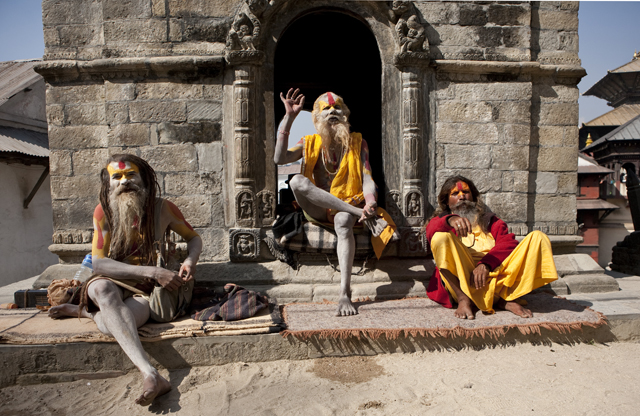
sadhusHinduism has the largest philosophical literature of any religion or country, comprising every shade of dualism and non-dualism, theism and non-theism, worship of the Divine as One or Many. Hindu philosophy examines the whole of life and the nature of knowledge on all levels, inner and outer. It includes many schools of Vedanta, Samkhya, Yoga, Nyaya, Vaisheshika, Mimamsa, Purana and Tantra, including modern teachers and their new insights.
Hinduism has the largest and broadest set of teachings of any religion extending into philosophy, mysticism, yoga, psychology, medicine, science, astronomy and astrology, art, literature, dance, music. It embraces all of human life and culture and excludes no aspect of learning as unsacred. Hinduism teaches us how to make any vocation, way of knowledge or culture into a spiritual path or way of Self-realization.
Hinduism has the largest literature of any spiritual tradition exploring and mapping higher states of consciousness beyond the physical, extending to the entire manifest universe of body, life, mind and intelligence. Hinduism describes in detail the many levels of the universe beyond the physical, extending to the Absolute beyond all time and space.
Hinduism has an understanding of time extending to vast cosmic cycles of billions of years, such as recognized by modern physics, and is not bound to any limited historical perspective. It teaches us that life on Earth is influenced by such longer cosmic time cycles.
Hinduism recognizes vast realms of spaces and numerous worlds, both physical and in the astral and causal realms, extending far beyond what science has yet imagined. It says that our current humanity is only one of many over time. It holds that intelligent life inhabits the universe as a whole and is interrelated in many ways that we can access within our own consciousness.
Hinduism finds holy sites everywhere in nature. It honors all nature as sacred. Hindu sacred sites can be found in mountains, rivers, forests, deserts, rocks and sea. It has mapped the sacred sites throughout the Indian subcontinent since ancient times. Such are the sacred Ganga River or Mount Kailash in Tibet. Yet Hindus can find sacred sites in the nature everywhere that they live.
Hinduism sees the human body itself as a temple of Divinity reflecting the structure of the universe through the chakra system. It has a deeper understanding of the subtle energy and thought patterns behind our physical form, such as science is only beginning to note.
Hinduism as Sanatana Dharma, a universal and eternal tradition of Self knowledge and cosmic knowledge, is the least divisive of any religion. It does not divide us by community but directs us to discover our inner unity.

Sabhar from India Facts team. by David Frawley

Thursday, February 4, 2016

Science, Secularism and Saturn

Science, Secularism and Saturn
In Hindu mythology, Saturn is easily the most difficult planet to propitiate. It symbolizes death, disease, poverty and all that we abhor in life.
Rationality is an extremely useful state of mind. Alas, it is not the only state of mind. Somewhere between rational enquiry and irrational mumbo-jumbo lies the non-rational world of art, poetry, music, mythology and much else. Of course, the non-rational does have rational as well as irrational building blocks, the concept of harmony in music and skilful exaggerations or logical contradictions in story-telling for instance, but as a cognitive phenomenon, non-rationality refuses to be tied down to either rationality or its opposing binary.
In other words, the pleasant experience of listening to music or reading poetry has little to do with our knowledge of sound waves or neuroscience. In contrast, rationality becomes indispensable in scientific enquiry and in societal matters, where forming explicit consensus over issues of importance is unavoidable. Hence it finds an extraordinary, if not supreme, place in our collective imagination.
However, as proposed above, rationality ought to have its reasonable limits and not just in the fields of aesthetics or art but also when we ascribe meaning to our everyday existence. The legendary propensity of human beings to interpret the infinite expressions of a limitless Universe within the rigid constructs of reason makes us unrealistically optimistic about the success of this hopeless endeavour. On a more grounded, less speculative note, the reliance on reason alone as our sole moral compass is sure to lead to disastrous navigation in social life. It is worth considering that psychopaths mostly self-identify as impeccable rationalists. The ‘Rationalist Delusion’ , with its fair share of caveats, is an accurate description of the belief system of a large and diverse section of humanity, one that worships reason as a panacea for all moral ills whereas evidence indicates that the reasoning faculty actually evolved to help us win arguments and rationalize our choices in hindsight rather than arriving at some higher objective truth.
bookThe sacred privilege granted to rationality in contemporary society can be traced back to the European scientific revolution, when long held beliefs of an entire civilization were brutally humiliated under the penetrating gaze of reason and science, subsequently liberating the whole populace from the stifling grip of religious superstition and prejudice. Descartes famously proclaimed, “I think, therefore I am” directly undermining the legitimacy of emotional and spiritual states of being.
Ironically, this apparently radical statement was an inadvertent rehash of the ideas of Plato and other Greek philosophers, who made a name out of deifying reason, long before Christianity had come about. In terms of the philosophy of science, the privileging of rationality became the basis for positivism and empiricism, which hold that any knowledge must ultimately derive its authority from reason.
Predictably, the triumph of rationality had a massive political impact culminating in the French revolution, with its celebration of liberty, equality and fraternity. Earlier, the growing trust in rationality had gone hand in hand with the Protestant Reformation and had witnessed a rift between the Church and the state, giving currency to the concept of secularism, the formal separation of religion and state.
By the 20th century, as the authority of Christianity was taking a nosedive in many parts of the west, blind faith in Jesus gave way to an unlikely alternative, blind faith in reason, marked by the rise of ideologies like communism and atheism, which are essentially Godless versions of Christianity in their obsessive urge to reduce all of history to a handful of simplistic ideas and the promise of ‘deliverance’ from aeons of oppression. Another feature that these secular creeds inherit from Christianity is a compulsive need to define an enemy, a secular Satan.
Communists profess hatred for the bourgeois, capitalists abhor communists, atheists blame religion for all evils and so on. In the middle of the same century, India ceased to be a British colony and in the true spirit of a colonized people, the country adopted a secular constitution inspired by the cherished values of the colonizer, which would not necessarily be a bad thing if only enough number of citizens subscribed to those values.
To come to an understanding of the schism between what the Indian constitution upholds and what various sections of the society believe in, let us first take a rudimentary look at the religious demographics in India. Hindus form the majority, Muslims are the largest minority and Christians are a distant third, followed by numerous other groups, some organically connected with Hinduism and others not.
Hindus themselves are an incredibly diverse polylith that allows for decentralization of customs, rites and rituals, often based on local geography and environmental constraints. Regardless of which religion they currently belong to, as a consequence of their Dharmic past, most Indians are deeply religious in temperament and therefore, many laws that are derived from a secular constitution find few instinctively eager takers. This dichotomy, though, is brushed aside by deracinated, elitist intellectuals appealing to the authority of reason, which is deemed sacrosanct.
Nevertheless, in the real world of action, it creates irresolvable conflicts in legislation and law enforcement. Imagine the emotional turmoil faced by a devout Sikh cop being asked to supervise the demolition of a Gurudwara to make space for a flyover. To be fair to the constitution, it is not a static document and has been amended nearly a hundred times since independence already but in an adversarial political environment where an elected government cannot pass regular, non-controversial bills in the parliament, expecting serious constitutional amendments that can have political consequences is asking for the moon. Thus, in practice, Indians are condemned to live with whatever has been thrust upon them by their colonial past.
It could be argued that given the mindboggling plurality of Indian society, to which modern secularism can make no claims of contribution, it would be impossible to work out a common minimum program that functions equally well for all sections and therefore, a code has to be enforced ‘from the outside’ with or without the consent of the masses. In their defence, the secularists declare that in time, such laws would trickle down into the consciousness of people and within a few generations, their primitive religious intuition would be replaced by a humane and rational outlook. This hope, other than being a product of the rationalist delusion mentioned above, also turns out to be a non starter for Indian society, which has a by and large successful history of resisting such attempts of acculturation by the powers that be, the Islamic invader, the colonial empire or the modern state. For the people don’t identify with the events of another time and place (read reformation in Europe), in which their own ancestry had absolutely no role to play.
This resentment is further accentuated by the glaring historical facts that point to a remarkably more harmonious social order in their own civilization. So, a relevant question to ask in this context is, if Hindu society never faced conflicts between the ruling class and the clergy, obviously due to its non-ecclesiastical make up, why should it accept a false consciousness imposed via hazy platitudes of secularist discourse? The most common answer is that Indian society is not entirely Hindu and it has to fulfil the aspirations of the minorities as well and secularism ensures that. Never mind the self referential circularity of secularist logic, let us now examine how secularism indeed provides a breath of fresh air to the minorities by effectively suffocating the majority.
bensonA secular state can choose to interact with religion(s) in the following ways as defined by Iain Benson, a Canadian-British legal philosopher:
  1. Neutral secular: No support to any religion in any way
  2. Positive secular: State creates general conditions favourable to all religions without favouring beliefs of anyone
  3. Negative secular: State not competent in religious matters but does not inhibit religious manifestations
  4. Inclusive secular: State not controlled by a single religion but works in the widest interest of different faith groups including non religious
It would be interesting to find out which of the above is the accepted definition of secularism in India. As the word was added to the preamble hastily at the time of 1975 emergency, it is unlikely that Mrs. Gandhi or her colleagues would’ve had the time to delve into such intricacies. But it is never too late to get to the bottom of a conundrum that is an inexhaustible source of sensationalism for the Indian media. From the above definitions, it is clear that in the Indian experience, putting a finger on one of the four variations turns out to be a near impossibility. It appears that our secularism is a ‘contextual’ secularism that changes its function as per political convenience.
The state turns positive in relation to Hajj subsidies and negative regarding issues such as large scale conversion by Christian missionaries. When it comes to Hindu issues, it becomes a neutral secular state, expressly suppressing facts through proxies and poking its nose into issues it has no business to be worried about. In states like West Bengal, the state adopts another form of secularism, that is, criminal secularism because it refuses to link appalling acts of crime to a ‘particular religion’.
Evidently, secularism in India is a false construct that only applies to the majority religion, whether it is in the form of the government control of temples or an unwarranted interference in educational institutions run by the majority community. This contextual secularism has serious repercussions for the Hindu society as it reopens the wounds that it has endured under a thousand years of largely exploitative rule by outsiders and alienates its various sections into becoming self loathing anglophiles, hardliner reactionaries or indifferent, apolitical and uninformed bystanders.
Hindus, under the influence of the dominant secularist discourse, are fast forgetting the art of speaking of their own Dharma on their own terms and it is getting increasingly common to find well meaning Hindus getting embroiled in inane debates about the ‘right’ to worship according to rules created in 16th century Europe.
Shingnapur, a relatively unknown village of Maharashtra, was dragged into one such duel between reason and ‘superstition’, when a group of self proclaimed feminists declared their intent to offer oil to the murti of Shanidev (Saturn) at the temple, a practice traditionally restricted to only males.Keeping with the arrogant trend of rationalist interventions, it was decreed that the practice was an expression of deep-seated patriarchy prevalent in Hindu society and how such discriminatory practices must end.
As expected, this was followed by a one sided assault on the temple and its unique tradition, with even Sri Sri Ravishankar, a popular Hindu religious leader throwing his weight behind the ‘activists’. No one seemed inclined to remind him that he had no authority over matters related to this temple or any other such temple in India because there is no central body that all Hindu temples align with through which he could have exercised his influence.
The Shani Shingnapur Temple technically belongs to the Shri Shaneshwar Devasthan Trust and more broadly to the residents of this village, whose many generations have adored and worshipped the deity in a particular way. Further, there is no evidence of these unique customs originating from social compulsions or tyranny of any kind. They belong to the realm of the esoteric and must be spared the jibes of secular rationality. Most importantly, the arrangement works for the locals, whose faith in the power of the deity’s presence inspires them to do away with doors for their houses and locks for their valuables, an ideal worth emulating for outsiders.
In Hindu mythology, Saturn is easily the most difficult planet to propitiate. It symbolizes death, disease, poverty and all that we abhor in life. It brings about great hindrance in self-expression and self-manifestation but only through these finite obstacles does it offer a gateway to infinite potential. The state of Hindu society for the last one thousand years also seems to have been strongly afflicted by Saturn, characterized by widespread poverty, subjugation, self-pity and exploitation by external forces beyond its control.
Reasoning (Yukti) has been a phenomenal asset for the Indian civilization, yet it has never been worshipped or put on a holy pedestal. Experience (Anubhava) has always superseded reason as far as its proximity to the truth is concerned. Saturn is the planet that grants us Anubhava. Let us not permit petty political reasons to overrule the spiritual experience of our diverse communities, who’re anyway suffering the tyranny of secularization for no fault of theirs. Let Saturn be our guide to self discovery, in Shingnapur and elsewhere.
Ashish Dhar, a Mechanical Engineer and an entrepreneur, lives in New Delhi. He is co-founder of pragyata.com, an e-learning portal dedicated to Indic knowledge systems.

Wednesday, February 3, 2016

When Kashmiri Pandits Fled Islamic Terror

19/01/1990

WHEN KASHMIRI PANDITS FLED ISLAMIC TERROR

by Kanchan Gupta
Rediff.com January 19, 2005
Srinagar, January 4, 1990. Aftab, a local Urdu newspaper, publishes a press release issued by Hizb-ul Mujahideen, set up by the Jamaat-e-Islami in 1989 to wage jihad for Jammu and Kashmir's secession from India and accession to Pakistan, asking all Hindus to pack up and leave. Another local paper, Al Safa, repeats this expulsion order.

In the following days, there is near chaos in the Kashmir valley with Chief Minister Farooq Abdullah and his National Conference government abdicating all responsibilities of the State. Masked men run amok, waving Kalashnikovs, shooting to kill and shouting anti-India slogans.

Reports of killing of Hindus, invariably Kashmiri Pandits, begin to trickle in; there are explosions; inflammatory speeches are made from the pulpits of mosques, using public address systems meant for calling the faithful to prayers. A terrifying fear psychosis begins to take grip of Kashmiri Pandits.

Walls are plastered with posters and handbills, summarily ordering all Kashmiris to strictly follow the Islamic dress code, prohibiting the sale and consumption of alcoholic drinks and imposing a ban on video parlours and cinemas. The masked men with Kalashnikovs force people to re-set their watches and clocks to Pakistan Standard Time.

Shops, business establishments and homes of Kashmiri Pandits, the original inhabitants of the Kashmir valley with a recorded cultural and civilisational history dating back 5,000 years, are marked out. Notices are pasted on doors of Pandit houses, peremptorily asking the occupants to leave Kashmir within 24 hours or face death and worse. Some are more lucid: "Be one with us, run, or die!"


Srinagar, January 19, 1990. Jagmohan arrives to take charge as governor of Jammu and Kashmir. Farooq Abdullah, whose pathetic, whimpering, snivelling government has all but ceased to exist and has gone into hiding, resigns and goes into a sulk. Curfew is imposed as a first measure to restore some semblance of law and order. But it fails to have a deterrent effect.

Throughout the day, Jammu and Kashmir Liberation Front and Hizbul Mujahideen terrorists use public address systems at mosques to exhort people to defy curfew and take to the streets. Masked men, firing from their Kalashnikovs, march up and down, terrorising cowering Pandits who, by then, have locked themselves in their homes.

As evening falls, the exhortations become louder and shriller. Three taped slogans are repeatedly played the whole night from mosques: 'Kashmir mei agar rehna hai, Allah-O-Akbar kehna hai' (If you want to stay in Kashmir, you have to say Allah-O-Akbar); 'Yahan kya chalega, Nizam-e-Mustafa' (What do we want here? Rule of Shariah); 'Asi gachchi Pakistan, Batao roas te Batanev san' (We want Pakistan along with Hindu women but without their men).

In the preceding months, 300 Hindu men and women, nearly all of them Kashmiri Pandits, had been slaughtered ever since the brutal murder of Pandit Tika Lal Taploo, noted lawyer and BJP national executive member, by the JKLF in Srinagar on September 14, 1989. Soon after that, Justice N K Ganju of the Srinagar high court was shot dead. Pandit Sarwanand Premi, 80-year-old poet, and his son were kidnapped, tortured, their eyes gouged out, and hanged to death. A Kashmiri Pandit nurse working at the Soura Medical College Hospital in Srinagar was gang-raped and then beaten to death. Another woman was abducted, raped and sliced into bits and pieces at a sawmill.

In villages and towns across the Kashmir valley, terrorist hit lists have been floating about. All the names are of Kashmiri Pandits. With no government worth its name, the administration having collapsed and disappeared, the police nowhere to be seen, despondency sets in. As the night of January 19, 1990, wears itself out, despondency gives way to desperation.

And tens of thousands of Kashmiri Pandits across the valley take a painful decision: to flee their homeland to save their lives from rabid jihadis. Thus takes place a 20th century Exodus.


Srinagar, January 19, 2005. There are no Kashmiri Pandits in Srinagar, or, for that matter, anywhere else in the Kashmir valley; they don't live here anymore. You can find them in squalid refugee camps in Jammu and Delhi. As many as 300,000 Kashmiri Pandits have fled their home and hearth and been reduced to living the lives of refugees in their own country.

Two-thirds of them are camping in Jammu. The rest are in Delhi and in other Indian cities. Many of them, once prosperous and proud of their rich heritage, now live in grovelling poverty, dependent on government dole and charity. In these 15 years, an entire generation of exiled Kashmiri Pandits has grown up, without seeing the land from where their parents fled to escape the brutalities of Islamic terrorism, a land they dare not return to, although that land still remains a part of their country.

A large number of them are suffering from a variety of stress and depression related diseases. A group of doctors who surveyed the mental and physical health of the Kashmiri Pandits living in refugee camps, found high incidence of 'economic distress, stress induced diabetes, partial lunacy, hypertension and mental retardation.' Statistics reflect high death rate and low birth rate among the Kashmiri Pandit refugees.

And thereby hangs a tragic tale that has been all but wiped out from public memory.

An entire people have been uprooted from the land of their ancestors and left to fend for themselves as a weak-kneed Indian state shamelessly panders to Islamic terrorists and separatists who claim they are the final arbiters of Jammu and Kashmir's destiny. A part of India's cultural heritage has been destroyed; a chapter of India's civilisational history has been erased.

Had this tragedy occurred elsewhere in Hindu majority India, and had the victims been Muslims, we would have described it as 'ethnic cleansing' and 'genocide.' We would have made films with horror-inducing titles. We would have filed cases in the Supreme Court of India. Our media would have marshalled remarkable rage in reporting the smallest detail.

But, this tragedy has occurred in Muslim majority Kashmir valley, and the victims are all Hindus, that too Pandits. What has been lost is part of India's Hindu culture, what has been erased is integral to India's Hindu civilisation.

Therefore, the government makes bold to record that the Kashmiri Pandits have "migrated on their own" and their 'displacement (is) self-imposed;' the National Human Rights Commission, after a perfunctory inquiry, refuses to concede that what has happened is 'genocide' or 'ethnic cleansing,' though facts add up to no less than that, never mind that 300,000 lives have been destroyed.

And, our jhola-wallah brigade of secular activists rudely turn up their noses to the plight of Kashmiri Pandits: Hindu sorrow, inflicted by Islamic terror, stinks.

Today, on January 19, the 15th anniversary of the forced flight of Kashmiri Pandits, look back at India's wretched history of secular politics and consider the terrible price the nation has paid at the altar of appeasement because the Indian State has, and continues to, toe the line of least resistance.


Sabhar from Jai Bharati

Monday, February 1, 2016

Shani Days - A prevailing perspective

Shani Days


Old moth-eaten joke:

Guy goes to Pandit and says he has the curse of Shani on him and could the Pandit do some Puja to relieve him.
Pandit: Sure, we can do a small yagna for Rs.250
Man:     Panditji, 250 is too much, can you lower the cost?
Pandit: Okay, we cut out some rituals and frills and do it for Rs.150
Man:     Panditji, even that is too much, can you lower it a bit more?
Pandit: How much do you have my friend?
Man:     I have Rs.20
Pandit:  Go home and relax, Shani can do no damage to you.

Hindus have been taught for long that “all religions are equal”. This includes teachings to children of other religions of Indian origin too (Sikhs, Buddhists, Jains). This “equal” thing didn’t start some 3000 years ago as some of the foreign religions currently in India were not even born. This “all religions equal” thing probably gained more popularity during our Independence struggle and MK Gandhi being its most prominent promoter. This falsehood has since been perpetuated by other sick politicians, media morons, anti-Hindu crusaders and even some sick Hindu Gurus. Two religions, in particular, consider their religion superior and their God the only true God – Christianity and Islam. For centuries since the Islamic and British invasion there has been a continuous and consistent onlsaught on Hinduism by these non-Hindus.

There were many Hindu customs that were done away with by Hindu reformers. Widow remarriage, women attending funerals or lighting the pyre etc are not frowned upon anymore. However, there are millions of temples in India, thousands of them famous and pilgrimage centres. The attack on Hindu traditions and customs has now taken a different turn – It’s very organised, sponsored, orchestrated by some organisations and amplified by the anti-Hindu media. It’s also well-funded by Chrislamists. In recent times, there’s a petition demanding women be allowed at Sabarimala temple – at least that’s a civilised way of doing things. Suddenly, there’s a woman called Trupti Desai and her gang who are agitating for women to allowed to perform at a temple in Maharashtra known as Shani Shingnapur.

Regardless of the demand it doesn’t call for a violent agitation and a riot-like blockade. And the timing is great – on Republic Day to distract from other celebrations. But is it really merely about this? I don’t think so. Dadri-campaign, Award-Wapsi, Intolerance campaign, Rohith Vemulla-campaign are all part of a well-organised campaign against India and Hindus. The incidents or situations are merely camouflages or “burqas”. Take a look at the agitator-in-chief with her gang over Shani Shingnapur:

While most Indians are looking forward to growth, jobs and a better future there are some who are engaged in a “Disrupt India” movement ever since ModiSarkar came to power in May 2014. The Congis and Aaptards are the main culprits who have become partners in creating chaos and anarchy whenever and wherever they can. The Shani-agitator Trupti Desai was soon identified for her links and connections:

She’s an Aaptard? That would hardly come as a surprise to anyone. The Aaptards’ boss is all over the place or he goes for Naturopathy. He’s in Hyderabad or Ghaziabad or at TV studios or doing movie reviews. Like a self-appointed class-monitor, Arvind Kejriwal runs to every anti-Modi TV doormat to complain “Teacher, Teacher Modi is not doing this… Modi is not doing that” and other times RTs all stupid tweets. Not one media crook ever asks him: “When do you do any work as Delhi CM”? The other guy in Doomsday-India partnership, RahulG either runs abroad frequently or runs to Hyderabad to protest or to Bundelkhand. Amethi is as far from his concerns as Dindigul is from Gdansk. That’s it! Life is fun! It doesn’t bother me much right now what Hindu temple rules are. It actually doesn’t bother these fake crusaders and agitators either. Any change in practices should come through articles, petitions and not by mindless nonsense as demonstrated by Shekhar Gupta:

ShekharG has such a vast warehouse of nonsense and hypocrisy that his items of high-value stupidity can be seen even by people in far-off lands. And one Mr. Konstantinos delivered a resounding slap to Gupta. All these scumbags believe only Hinduism needs reforms not Islam or Christianity. And then they whine when their stupidity is scoffed at by even non-Hindus. There’s the other happy-tongue hypocrite from Congress called Shashi Tharoor who once did a Puja at this very Shani temple with his then girl-friend by his side in 2010:

But since this bogus agitation over Shani started and his pics started appearing all over (to reject the fakery that women are not allowed inside) Tharoor had to “clarify”. He states women are not allowed to do the rituals and that’s the problem:

Naturally, ordinary folks on Twitter see through these hypocrites very easily. Firstly, these jokers will go to Tirupati or Shani Shingnapur either for penance or to beg the Lord for special favours and then they will poke holes into the very temple they bowed to. If you’re so against their rules, why do you even go there? Pray at home – If there’s a God I am sure He can still hear you. @IndiaSpeaksPR rightly wants Tharoor to go home and demand equal rights for Muslim women. Will they? No, they will run with their tails between their legs fearing a thousand swords chasing their neck. And that is the undeniable truth. And if that’s not enough, imagine Harsha Bhogle giving a big lecture on batting skills and scoring runs to Virat Kohli. Thus, you have a mindless news channel which brings on a Muslim group that advises gender-equality for Hindu women:

Really? All the Muslim women in India have achieved such bliss in seventh heaven in their own community that they now want the same for their Hindu sisters? This downright hypocrisy of our media and Muslim groups is not worthy of comment since all of us know that status of women in their community. All the ridicule this sort of thing gets on SM is very deserving and rightly directed. All religions are NOT equal! It doesn’t take Einstein to discover that in India or anywhere in the world. Over the years political parties, especially Congress and Communists, have appeased Muslims and Christians so much and trampled on freedom of Hindu temples and and Hindu traditions that none less than the Supreme Court had this to say:

That report was in February 2011 in the TOI and SC clearly said “The govt’s attempts to reform personal laws don’t go beyond Hindus who have been tolerant of such initiatives”. Yes, the Hindus have been too tolerant of anti-nationals, anti-Hindus and Commies who eternally hate Hindus. So, to the bogus and idiot ranters and agitators who whine about rules at Hindu temples I would just say “go fly a kite”. Any reforms in Hindu temples or their practices is best left to their management and their regular devotees.

Now, here too the Times of India indulges in trickery. The current page of the above article has the title “Centre changed personal laws of only Hindus”. Who is the Centre and why did TOI change its original headline? Because in the pic is what the original headline said. So TOI replaced “Govts” with “Centre”. Why? Make a wild guess. The same article mentions SC reiterating the need for Uniform Civil Code which will help in eliminiating differences and discriminations. But tell the Muslims and Christians about UCC – You will have them and Kejriwal and Derek O’Brien and Pappu and Yechuri out on the streets as if Emergency were declared in India. I say, let the hypocrites bark over Shani because if they can agitate for stupid demands I don’t see what good Lord Shani can do them anyway. They don’t need Shani’s blessing at all. But there is something else they are agitating for.

Since ModiSarkar came to power there has been a series of high-decibel, fake campaigns in the media to raise muck on some issue or another. From the FAKE “Christians under attack” campaign to Dadri to Intolerance to AwardWapsi to RohithVemulla to Shani Shingnapur and many more, the Congress, Aaptards and Commies have been trying hard to tar the ModiSarkar. Kejriwal and RahulG are nearly like Agitators-for-rent or Rudaalis-for-rent.  All these sudden bursts of agitations are also intended to cover up bad news like Netaji files not showing Nehru in good light or retaliation for some NGOs being investigated for fraudulent funding. Each time this burst happens some important development is invariably drowned in the noise.

There’s just more bad news for them.  A recent Nielsen-ABPNews poll shows Modi remains popular and they haven’t managed to cause damage. Polls are only indicators but I would dare say the “Shani Days” for these Commie agitators aren't over yet by a long shot. Their desperate hunger to regain the poison called power may have to wait another seven and a half years at the least, if they manage to survive. 
Sabhar from Media Crooks

Wednesday, January 6, 2016

Kejriwal and Pappu: A Tale of Two Angry Old Men


In the 1970s an Angry Young Man burst into the Bollywood scene. His name was Amitabh Bachchan and he changed the industry forever. In the 2010s, two angry but not so Young Men burst into the political scene: Congress Vice President Rahul Gandhi and Delhi Chief Minister Arvind Kejriwal.

Both of them want to change Indian politics the way Amitabh changed Bollywood. But reel life is not real life as the two have already discovered. However, their supporters still labour under severe delusions.

But the first question to be asked is why they are so angry in the first place. Have you ever seen Andhra Pradesh Chief Minister N Chandrababu Naidu getting so worked up in the public space and tearing up something? Have you heard Defence Minister Manohar Parrikar call anyone a psychopath?

So what is so special about the Pappu-Kejri duo? The answer: Both have Zero Achievements. Has Pappu ever been Chief Minister of a State or a Cabinet Minister? Has Pappu been a top bureaucrat or a CEO of a credible high performing company? The answer is a big zero. Pappu has nothing to his credit and has changed nothing for India.

He was handed Amethi like a family property on a platter and his 2004-16 Lok Sabha tenure has seen only misses and almost no hits. He bunks Parliament, takes long leaves, he chats like a schoolkid with other MPs when someone is speaking, hardly asks meaningful questions or is part of regular important committees.

He has zero talent, zero ideas and zero achievements. He can’t sell himself as a product and explain to the masses how he has already brought about at least one change somewhere and hence can bring about a change when he sits on the Prime Minister’s seat.

modi

So the only thing he can do is attack the guy who is doing work, in this case Prime Minister Narendra Modi. That’s why you will see him getting worked up in rage and attack Modi for every stupid thing he can think of and rubbish his each and every policy even though he makes absolutely no sense at all.

That’s why you’ll see him sporting stubbles, rolling up his sleeves, doing theatrics like tearing up pieces of paper and shouting on the podium. At best he can change the script and travel in a Mumbai local train or eat in a Dalit’s hut.

That’s why he’ll get into ever greater fury when a sessions court and High Court finds merit in him being an accused in the National Herald case. That’s why you’ll find him using all his resources in disrupting Parliament and accusing Modi of vendetta instead of focusing on the case ahead.
And here’s the thing. Whether India likes it or not, it is stuck with the Angry Old Pappu Avatar at least till the 2019 general elections. Give the man a break. The poor guy has just one weapon in his armoury and that’s the only one he’s going to use non-stop.

Now let’s come to Kejriwal. You’ll probably say that Kejri is different. He was an IIT and IRS. He headed an NGO and won the Magsaysay Award. He is Chief Minister and has 67/70 seats in the Delhi Assembly. So far his record looks good. However, that is only on the surface. Deep down there is no difference between Kejri and Pappu. How?

We hear of IAS officers bringing about great changes and being transferred every six months. Kejri was posted in one place for his entire 15-year career as a bureaucrat. Again a personal achievement and nobody knows how India or the department benefited by any innovation he made there. Insiders know how murky the NGO industry is and more details about his dealings are sure to emerge in the future.

Then what of the umpteen allegations Kejriwal hurls against everybody? He went after Sheila Dixit, Robert Vadra, and Arun Jaitley to mention just a few high profile names. He gave press conferences and ranted and raved and looked really good. But did he really make any difference?
Did he present any new evidence? No. It’s always a rehash of newspaper cuttings and second-hand allegations. Did he take anyone to court? No. Has anyone been convicted because of him? No.
In fact, Arvind Kejriwal had to write a humiliating apology letter to Infrastructure Minister Nitin Gadkari who dragged him to court. This may be repeated in the Jaitley affair.

BJP leader Subramanian Swamy was one of the leaders who fought against the Emergency, ended the then Karnataka Chief Minister Ramakrishna Hegde’s political career, sent Tamil Nadu Chief Minister Jayalalithaa and former Telecom Minister A. Raja to jail and made Congress President Sonia Gandhi and her deputy and son Pappu accused and dragged them to court.

Kejriwal is not even 0.01% of Swamy. And yet the media calls Kejri a corruption crusader and Swamy a disrupter maverick. There is no way you can counter such terrible media bias. Now let’s come to the citizens of New Delhi.
Has their life improved? No. Do they have free Wi-Fi, all the CCTV cameras that were promised and the schools? No. Do they have to pay less money? No. Prices have increased and a new, pointless environment tax been introduced.
Has the garbage and sewage situation improved? No, it has worsened.

Have power cuts ended? No. Power Minister Piyush Goyal’s fantastic power reforms have already benefited many areas in India but incompetent Kejri will never be able to take benefit.
Has pollution come down? Immediately after becoming CM, Kejri announced that Delhi’s small industries need not apply for a no-pollution certificate. Won’t that increase overall pollution?
One report said that private vehicles account for just 2-3% of air pollution. That renders the Odd-Even policy (with all its umpteen exemptions) a sad joke. And yet the media was dancing with joy within just two hours of this brainless and ineffective rule being implemented.
There is no way you can counter such propaganda.

New Delhi, Bihar and West Bengal are heading for terminal decline. But there will be no reportage because they are headed by rabid Modi haters. Andhra Pradesh, Maharashtra and Rajasthan are making great progress.

But that will be played down because it will make Modi look good.Attack Modi and not only do you become secular but you become great at governance too.
Back Modi and not only do you become communal but you become bad at governance too.In the Angry Young Man movies, Amitabh fought his way to a change by the end of the movie.Pappu and Kejri will keep getting angrier and will keep adding more zeroes to their zero achievements till date.
But they are safe. All they have to do is keep attacking Modi with greater intensity.Kejri calling Modi a psychopath in a Tweet was just a natural part of this escalation. If their supporters keep willingly getting fooled, then it is their choice. We live in a democracy after all.

The author is a Bengaluru-based journalist. He has previously worked for organizations like the Hindustan Times, CyberMedia, the Centre for Science & Environment and IT market research firm IDC India

Tuesday, January 5, 2016

Tolerance on the Foundations of Intolerance

Tolerance on the Foundations of Intolerance

Recently, writers, artists and scientists have returned their awards. Other similar eminent persons also have joined hands with these protesters. At this juncture, it will not be irrelevant to discuss the political views of these eminent persons.
The politics of politicians faces a test at least during elections. But it is left to the students of Literature and Social Sciences to discuss the politics of the writers, artists, scientists, social scientists or historians from time to time.

Semantics

I have to give two clarifications.

First, I am conscious of my vernacular English which may not be of the standard of the mainstream intellectual discourse in India. But I do think that intellectual discourse need not be left only to sophisticated English speaking writers. Therefore I hope readers will tolerate my English.
The second clarification is more important. It is about the words used in this essay. The word Hindu used here is to mean as it means in the government records. It does not mean a homogeneous unit or does not refer to a single group of people with certain belief systems. This word includes all those communities, castes and traditions which are included under the category Hindu in the census data of the government.
Here, the word Hinduism does not mean a religion that is similar to Islam or Christianity. In this essay the word religion does not include Hinduism as it includes Islam and Christianity.
The words secular, secularism and secularist are used in the sense they are used by the award-returning writers. I should also clarify that I believe their model of secularism is not the real secularism, if at all secularism is the right word to be used and that their idea of secularism does not serve the purpose that it should serve.

Growing Intolerance: Placing the Responsiblity

Those writers who have returned their awards have claimed that this is an act of protest against the Sahitya Akademi, against the Central Government or against the rightist groups. The core of all these statements is that they are protesting against the growing trend of intolerance in the country.
Growing trend of intolerance’ does not refer to any single or specific incident. It is something that takes place over a period of time. Therefore we can agree that the questions such as why they did not protest when Sikhs were murdered or when emergency was imposed etc, do not arise.
We can also agree with their argument that, though late, at least now they have woken up and that it’s better late than never. But the fact that this growing trend of intolerance has become visible to them only during the last one or so years shows that they have just got their spectacles changed and we can easily imagine the colour of the new spectacles.
We should note one small, but very important difference as far as the conflicts or relations between communities are concerned. Though equality between the castes is not achieved completely, discrimination based on caste has definitely decreased during the last six or seven decades and the standard of living of Scheduled Castes and Other Backward Castes is better when compared to the earlier years.
This is because of the efforts of reformers of the distant past, recent past or present. We should also take note of the contributions made in this regard by constitutional measures, various governments and the writers who created awareness.
sacharThe social unrest caused by the policy on SC, ST and OBC is negligible when compared to the amount of change or empowerment it caused. But the policy on Muslims has not brought about any significant improvement in the standard of living of Muslims. If it has helped Muslims, Sachar Report should have shown different findings.
The Indian secular discourse has resulted in alienating Muslims and in turn, has harmed them. If we see the relations between the Hindus and Muslims the gap is widening day by day. This has made the award returning writers believe that intolerance is growing.
But who should be held responsible for this intolerance?
Actually the secular discourse during the last sixty years has not succeeded in reducing the tensions between Hindus and Muslims. Instead, it has increased intolerance.
The award returning writers call themselves as secularists and advocates of multiculturalism and pluralism. Their writings are the most dominant part of India’s secular discourse and if there is any fallacy or contradiction in the secular discourse they must hold themselves responsible.
What are the ways in which the harmony between various communities need to be retained and improved? Is it through police action or is it through the mutual trust, attitudes and mind-set of the people? If it is through mutual trust and the mind-set of the people, then the state should create a conducive atmosphere for that. Writers should provide thoughts, social theories and literature in that direction.

Secular Discourse has Proven Deadly

What did the post independent secular discourse do? The basic premise of this discourse is this: Hindus are majority; Muslims and others are minority.
According to the secularists, the multiple identities of Hinduism are considered as a single unit called majority. Majority-minority division based on religion is not considered as communal politics by these secularists!
At the same time, the secularists argue that only some fringe elements are intolerant and only these elements are spreading hatred and that the vast majority of Hindus are for pluralism.
If this is so, how can they argue for some special status to the minority, thereby indicating that all the Hindus are categorized under one unit namely the persecuting and dominating majority?
If they agree that most of the Hindus are tolerant and pluralists then why should they be treated as a majority which can do some harm to the minorities? Moreover, almost all the secularists have argued that Hindu is not a homogeneous entity. For example, see Amartya Sen’s The Argumentative Indian or any other book by a known secularist.
In which case, how can such heterogeneous groups be considered a single majority? How can there be a minority when there is no majority? The secularists use the concept of minority in their discourse even though they cannot identify the majority!
The constituent assembly had a very lengthy debate about this aspect of minority, but unfortunately it could not give up this notion. The majority-minority divide holds well only in countries where the majority of the population follows the religion which considers conversion of others an important part of religious duties. For instance you can have the majority-minority concept in Pakistan, UK, UAE etc., but not in India.

Hinduism

So, isn’t there anything common among the Hindus? The answer is yes.
Some common features follow: these traditions or communities considered under the umbrella of Hinduism do not have a ‘religion’ in the sense of Islam or Christianity.
Two: Hindus believe that they should offer Pooja to the created as well as the Creator. (Amir Khan’s film PK miserably fails to understand the Indian context when the hero says that all other numbers except that of the Creator -God- are wrong numbers).
Three: ‘Deva/devathe’ (God/Goddess) can become human beings and vice versa.
Four: Existence of both female and male deities.
Five: Creation, recreation and criticism of written or oral Puranas.
The above features are related to one another. These features are applicable in case of Scheduled Castes, Brahmins and other castes, even in case of Adivaasis or Tribes.
Actually the concept of Hinduism refers to the above aspects. This is what is usually called a way of life. Though some communities claim that they have sacred texts, such texts are open for interpretation and criticism.
vivekanandaNo sacred text prevented Swami Vivekananda from criticizing oppression based on birth. In fact, reformers like Vivekananda interpreted the texts according to the needs of the hour and used them to advocate modern ideals like equality.
The above-mentioned common features did not give Hindus the ideology or strategy of conversion. You need not consider it as the generosity of Hindus. It may be a weakness or vulnerability when compared to Islam or Christianity. In fact the very nature of Hindus or the above features do not enable them to have a strategy of preserving their set of beliefs intact or imposing them on others.
Secularists may mention about the caste hierarchy here and may say Brahmins imposed their will and rule over others. Even if it was true, it must have benefitted Islam and Christianity instead of posing any threat to them.
We know from history that not only the downtrodden were converted but the families from the so called upper castes were also converted into Islam and Christianity during the Islamic and British period.
In which case, why do these secularists consider such weak or vulnerable and separate entities of Hinduism as a majority group capable of domination over the other faiths?
Have any of the Parsee families experienced the feeling of insecurity in India because of Hindus?
Actually, being quite prosperous, Parsees could have easily become the targets, if we go by some of the Marxists’ theory that economic condition is one of the main reasons for communal hatred.

A United Hindu Vote Bank?

The innumerable identities or the communities coming under Hinduism do not have the political power as a single Hindu unit. There are talks about caste vote banks, but there still is no Hindu vote bank.
Now there may be efforts to create Hindu vote bank, but such efforts can yield result only because of today’s secularism! There are more Hindus who vote against the so called Hindu Party BJP than those who vote for it.
Elections in India have proved time and again that Hindus are the most secular in their voting pattern. But most election analysts, like secular thinkers, believe that secular votes are divided if Muslim votes are divided.
The recent Bihar election of 2015 is interpreted as a victory of secularism. But the irony is, the secularists do not recognize that the same result demolishes the basic premise or the foundation of Indian secularism which is the majority- minority divide.
The so called secular thinkers must understand that if the country is still secular by and large, it is not because of secularism but in spite of secularism. It is a blunder to think that tolerance or intolerance is a mere law and order issue, that only a non-BJP government can ensure tolerance. The actual problem lies in the secular discourse and the secular policy which various governments including the BJP follow.
The politicians and secularists of post independent India could have tried to do away with the division between Hindus and Muslims created by British rulers. Instead, they wanted to have an imaginary enemy to Muslims, Christians and so on.
This imaginary enemy called Majority Hindus helped the politicians and the secularists to project themselves as the protectors of the so called Minority Groups.

Teaching Secularism to Minorities

Till today secularists have succeeded in sustaining their relevance as the protectors of the interests of the Minority. But these secularists have never tried to teach secularism to Muslims.
They give silly justifications for this sort of attitude. They argue that it is the responsibility of the majority to make peace. This justification falls apart mainly for two reasons. One: as we have seen there is no such single majority in our country. Two: intolerance of a very small group can cause conflict in a large society.
It is quite clear that the secular policy of post independent India wrongly considered Hinduism as another religion just like Islam and Christianity. As a result of this, today some of the Hindus are trying to convert Hinduism into Islam by becoming more and more intolerant.
The secular discourse in India tried to preach secularism and toleration to Hindus who were naturally secular. What happens when you try to change somebody who is doing right things? He or she will start doing wrong things. This is precisely what happens in India today.
The fact that the Hindus not only tolerate others but are also patrons of other religions, can be easily proved by counting the heads of Hindus among those who have returned awards.
Our secularists have the objective of correcting Hindus only and keeping only the Hindus tolerant. So, chopping off the hand of a teacher in Kerala is not intolerance. Kashmir violence does not become an example of intolerance. Are Kerala and Kashmir not inside India according to them? Actually that is not a relevant question because the fact is that the secularists believe that some groups have the right to be intolerant by virtue of their religion.
hospitalI do not know how many of the Pakistani writers and artists have returned their awards for the fate of Hindus or Christians and even Muslims in that country. What explanation do these secularists give for the fact that Muslims are safer in India than in Pakistan?
Does the RSS have any hand in the insecurity feeling experienced by sections of Muslims in Pakistan? The Indian writers and secularists could have requested at least those Pakistani artists who were restricted from performing in India to join hands with them in their protest against growing trend of intolerance in India (in India because there is no intolerance in Pakistan according to the Indian secular thinkers) as writers and artists do not have geographical boundaries.

Tolerance and Common Civil Code

Demand for common civil code becomes cultural politics or an attack on pluralism, especially when the demand is put forward by the Sangh Parivar. But now Romila Thapar says that common civil code is a necessity in a secular country. (See ‘Lokajnaana’- Kannada Journal, Jan-April 2015, published by Tumkur University. I am curious to know the response of other secularists to this opinion of Romila Thapar).
Amartya Sen says that if Muslim women suffer because of Muslim personal law, it should not bother Hindus. But the Sachar Committee blames the society-read Hindus– for not giving access to Muslims. If almost 50 per cent of the population -that is to say women- of one community are not encouraged to work outside in the name of religion, how can the economic condition of such a community improve?
In such a situation, if you tax Hindus by way of special provisions, reservations etc. to Muslims, it will automatically create some sort of discomfort among Hindus. Sen and other secularists, who wrote lengthy articles about violence, do not understand that there is every possibility of conflict if, of the two coexisting communities, one goes forward and the other backward.
Actually this concept of tolerating others with great difficulty is applicable to Europe or Islamic countries and not India, at least till the present form of secularism took its birth.
Thinkers like Swami Vivekananda and Ananda Coomaraswamy have given their opinion about the problem in the concept of tolerance. Their views are very valid in our case. Says Ananda Coomaraswamy:
“..the word (tolerance) is not a pretty one; to tolerate is to put up with, endure or suffer the existence of what are or appear to be other ways of thinking than our own; and it is neither very pleasant merely ‘to put up with’ our neighbours and fellow guests, nor very pleasant to feel that one’s own deepest institutions and belief are being patiently endured”.
We know that the word intolerance is generated from the word tolerance. But we should note the most important factor that in relations between religions or communities, the concept of tolerance has its root in intolerance.
People started to think of tolerance as a virtue only after they saw the amount of intolerance in some religions. How does accepting others with pain (tolerating) become a great virtue if you believe that other faiths also have equal right to exist?
Europeans brought this word tolerance to India by keeping in mind their own concept of religion. Their religions cannot happily accommodate other faiths in its neighbourhood, but accept it only with pain or because of inevitability.
Even after nearly seven decades of independence Indian secularists are not independent.
They still depend on the words and concepts thrown at them by the British, namely, “tolerance,” “religion,” “majority,” “minority” etc. We should note that tolerance has its roots in intolerance and our secularism has its roots in religion!

Contradictions in Secular Discourse

The problem with secularism is that it has wasted its energy by responding, reacting and criticising the RSS or Sangh Parivar, that too of Golwalkar and Savarkar. It is amusing to see secularists still depending on Savarkar or Golwalkar’s writings to attack the RSS or Hindutva. Will it be fair if we criticise today’s Marxists on the basis of Marx’s remarks on colonialism? It is not actually the question of fairness; it is the question of usefulness.
Secularists easily blame Sangh Parivar for creating suspicion between communities or propagating hatred during the past few decades. But we should remember that almost all the governments, media, various academic bodies, Sahitya Akademi etc. were headed by secularists till very recently. There was no opportunity to “saffronize” the school textbooks till recently.
However, the Sangh could penetrate more and more into the minds of the people across the castes and communities as the years passed by and as more and more people received formal education. How was this possible when everything was in the hands of the secularists?
The answer to this question points towards the fallacies and contradictions in the secular discourse. Many secularists typically lament that secular forces are divided and various units of Sangh Parivar-read communal forces- are united.
This time these secularists must be thankful to the voters of 2014 for uniting secularists by creating a common enemy: prime among them, Narendra Modi. But this unity has not helped them come out of their fallacies and contradictions. Actually this unity has made their contradictions more visible.
To see one of the contradictions in secular discourse, just consider the following four dicta which almost every secularist subscribes to.
One: We should preserve pluralism and multicultural nature of our country.
Two: We should support inter caste marriages, and annihilation of caste is desirable.
Three: We should not oppose conversion.
Four: The Sangh Parivar is a threat to pluralism and multicultural society.
I just wonder how can those who agree with the second and third statements make the allegation we see in the fourth statement?
Doesn’t the first statement contradict the second and the third statement? In an inter caste marriage, either both or at least one partner has to give up his or her culture, at least a part of the culture.
In the same way, loss of one’s own culture happens in the case of conversion. Moreover, according to the secularists, culture does not imply only values or virtues and such other things; it includes food habits, rituals, language etc.
In which case, how should the Constitution, or the real secularists have treated Muslims? Thousands of villages where Hindus and Muslims lived in perfect harmony could have shown the answers.
villageThere were no cases of intolerance. The concept of tolerance was not required there because the existence of others was not something to be disliked. In such villages Muslims were of just another caste or jaathi. The same thing is true in case of Christians, Jains or others. All the castes were maintaining their respective beliefs and practicing their cultures without any problem.
Of course the government or constitution had to rightly intervene in some of the practices of some castes, such as untouchability etc. The OBC reservation as and when implemented could have anyway been applied to Muslims and others just like Hindus. It is not too late now to have a relook at our form of secularism.
The above analysis shows that all the problems we face today are because of our secular policy which viewed Hindus, Muslims, Christians, Jains or Parsees from the point of view of Europe or more precisely, from the point of view of ‘religion’ instead of traditional Indian point of view. This traditional Indian view was of Muslims and others in India as much as that of the Hindus.
Imagine somebody saying that he or she does not want to live in the country if Mr. ‘X’ becomes the Prime Minister (which can happen only after being elected by the people democratically). Isn’t this intolerance?
But these award returning secularists do not think so. If you do not like the existence of something and still tolerate it, then it is called ‘tolerance’. Running away or not intending to stay near the people you dislike cannot be tolerance.
Today we just start thinking whether these secularists have suddenly lost faith in democracy. Do they at least believe that the people of this country are competent enough to elect their representatives? They had no problem with the decision making capacity of the people when there was a very high percentage of illiteracy.
But now, when the people are more and more informed because of education and various media, these secularists have started to suspect the voters’ decision making capacity! Majority rule, single party rule etc. have suddenly become dangerous.
This kind of intolerance in the name of secularism frustrates the common man and makes the members of some particular groups more and more intolerant.
Dr. Ajakkala Girisha Bhat teaches Kannada at an undergraduate college.He has authored more than ten books in Kannada including ‘Buddhijeevi Versus Bouddhika Swathanthrya’