Tuesday, May 26, 2015

Anomalies Of Secularism

ANOMALIES OF SECULARISM
 
An understanding of the Hindu view of Christianity and Islam also exposes the anomalies of Secularism of the Indian variety. Secularism was the means adopted by the people and rulers of Europe to achieve pluralism and freedom of thought by fighting the exclusivist ideology of Christianity and its institutions.
 
The United States became secular through the passage of the First Amendment to its Constitution which forbids the encroachment of religion on the affairs of the State. By this radical measure the United States ensured complete separation of religion and the State - which is what Secularism really means.
 
But in India, unfortunately, Secularism has become a historical and semantic anomaly. The word �secularism� has been distorted and misapplied to achieve the exact opposite of its real meaning and spirit. While Europe and America have used Secularism to protect their pluralistic societies against theocratic institutions, in India �Secularism� has been used as a means for suppressing pluralism inherent in the Hindu tradition and sheltering exclusivist ideologies.
 
The Pagan past of Europe and the rest of the non-Christian, non-Islamic world is akin to Hinduism. So we think this is the time for Hindus to assert the ideological kinship and form a global chain to combat exclusivism and form pluralistic societies based on individualism, humanism, rationalism and science. This means liberating the people from the clutches of the Missionaries and Mullahs throughout the world.
And the beginning is to be made here in India by converting Hindus by accident of birth to Hindus by conviction: neither science nor reason could have any objection to that conversion.
A new thinking on religious questions is coming to the fore in most countries of the world. There is also a growing awareness that their present religions, Christianity and Islam, were imposed on them and that they themselves belonged to a different religious tradition. Ralph Borsodi, an American educationist and social thinker, observes in his The Challenge of Asia that �everywhere in the world, except in Asia Minor, the three great semitic religions - Christianity, Judaism and Islam are intruders�, that �indigenous Europe is pagan,� and that �in Europe, Christianity is a superimposition, in Asia, Islam is.�
 
THE INDIAN SCENE
 
A significant outcome of the last general election is that Hindus have decided to assert themselves through the voting pattern. The election result conveyed the unmistakable message that the so-called �minority� votes are not the arbiter, and that the Hindu votes also matter if they are rightly placed. All recent elections point in the same direction.
The Congress performance was poor not because it was losing the confidence of Muslims but because it was losing the confidence of the Hindus. After the Congress debacle in Gujarat in the last election, only Chhabildas Mehta, ex-Chief Minister, tried to alert his party to this reality but he was ridiculed by the �secular� ideologues. They were unwilling to sacrifice their pet theories despite the facts exploding them.
Other parties going out of their way to woo the Muslim votes have also suffered the same fate as that of the Congress. The Janata Dal is almost wiped out. It is now only a small party made up of still smaller groups.
Hindus have woken to the fact that their support is taken for granted and the Congress and other parties are pursuing anti-Hindu policies. Earlier the Hindus had assumed that the Congress was a Hindu party because most of its leaders were Hindus by birth. But in the Congress party, there were two kinds of Hindus - those who were ashamed to be known as Hindus and those who had regard for Hindu ideals. But Jawaharlal Nehru, a Hindu by accident of birth, systematically eliminated the influence of the pro-Hindu leaders in the Congress and adopted policies which negated Hinduism. And now the Rashtreeya Swayamsevak Sangh and its Parivar seem to think more like Nehru and less like Hindus by conviction.
Anti-Hindu elements in various parties like leftists and Muslims are working for weakening and ultimately the destruction of Hindu society: The so-called intelligentsia in the universities and the media are their tools.
The immediate task for the Hindus is to identify and isolate these Hindus by accident of birth who work for and with enemies of the Hindu society, calling themselves secularists. But this has to be done primarily through a Hindu cultural-spiritual renaissance.
 
THE HINDU-HINDU PROBLEM
 
So basically, it is not a Hindu-Muslim problem but a Hindu-by-accident versus Hindu-by-conviction problem.
Eradication of Nehruvian Secularism should be the main target. The secularists, who are mostly the anti-Hindu Hindus should be told that the count-down of their �hundred crimes of Shishupala� stands completed, and that there will be no more exemption from punishment for their offences. For they are the enemy within, playing the role of the Trojan Horse.
Hindus can rest assured that Hinduism is neither outdated nor is it against science and technology. Hinduism respects the humanistic approach to problems. All these basic insights of Hinduism promote modernism at its best - a rationally enlightened scientific outlook promoting a humane and open society.
Therefore, the forthcoming ideological battle can be aptly described in terms of Sir Kari Popper�s famous book - THE OPEN SOCIETY AND ITS ENEMIES.
 
Footnotes:
The writer is a student of philosophy, and has made his living as a journalist. He has worked in the Organiser and the UNI. 
 

Thursday, May 7, 2015

Thought - Sick and Ill-treated

No organization has so far found any solution to merge the Muslims in India with Hindu society. National Congress, Bahujan Samaj Party, Janata Dal and such parties have only succeeded in increasing the rift between the two creeds and making Muslims more stubborn. Muslims are like an idiotic son of negligent parents. Careful attention only can correct him. Muslim as an individual is quite accommodative like other human beings. He is fanatic when he poses as a follower of Islam.
Islam has spread through sword and coercion. It hardly cares for the human mind. Civilization in Muslim society is very poor. Tolerance is almost nil. That is why there are continuous wars and bloodshed in Muslim-ruled countries.
Muslims are always troublemakers for people having different faiths. Islam is not ready to accept any God other than Allah. Islam feels that everybody on the globe should accept Allah and only Allah as his God. The famous (?) painter Hussain depicting Hindu Goddess Saraswati in an ugly manner is a noteworthy example. Lack of education is the cause of intolerance.
The real solution to the ghost of Islam in Muslim mind is education for fraternity and coexistence. Muslims should be made to understand that other religions on the globe cannot be destroyed just by sword or gun. All faiths have to co-exist. Some learned Muslim scholars have understood this fact and they have merged as true citizens with other societies.
The concept that �religion is for the uplift of the soul and not for destruction of other faiths� needs to be inculcated in Muslim minds. Indian Muslims cannot leave India. At the same time, India can never become an Islamic totality. They, therefore, have to co-exist with others as people of other faiths like Christians and Parsis are doing. Hindus have many faiths among themselves. Even then rifts hardly ever come to the surface.
By a study of history one can see that the contribution of Muslims in general to human civilization is almost zero. Muslims still want to live in the medieval times. They waste their energy in coups, quarrels and bloodshed.
 
Understanding of Religion
Religion is a living force for a person. Man learns basics of life from parents, teachers, the surrounding society. What the mother is for a child, religion is for a person. One should not try to annihilate other religions; it is like snatching away the mother from the child. Through the process of learning, one can analyse and think of good and bad. One can improve and refine one�s living through this process.
Nothing in this world is as pure as knowledge. Knowledge refines the attitude of man and he understands in a true sense as to what is right and what is wrong.
 
Muslims - Sick and Ill-treated Children
Muslims have fought wars and thereafter stayed peacefully with the people of other religions. It is leaders, kings and fanatics who have used Muslims in the name of Islam for their selfish motives. Hindu leaders have coaxed Muslims on similar lines for their selfish interest. Today, every political party is trying to use Muslims for the party benefit by invoking the so-called injustice which has never been done to them.
State boundaries disputes and the Mandal Ayog exemplify the attitudes of selfish leaders. Congress, Janata Dal, United Front Groups are coaxing the people on caste and creed lines, thereby arousing hatred among them. Muslims are looked as vote-banks. Such selfish leaders and political parties can be understood only through the process of education.
Hindu Organizations should view Muslims as sick and ill-treated children of bad parents. Muslims should be caressed only with better education and not by giving concessions and temporary relief. Better family relations, respect for woman, freedom of thought, and basic understanding of human behaviour can make them real citizens.  Muslims, therefore, are required to be educated with students of other faiths. They should attend the schools of Christians and Hindu Organizations. There should not be any special treatment for them as Muslims. Muslims can certainly improve through the study of science and humanities and not through Islam. They should be taught first to be human beings.
Almost all religions except Islam have accepted modern scientific approach. They have discarded old, impracticable and irrelevant religious customs. Muslims have to go in the same footsteps and become sensible and civilized. That will save Islam. Otherwise it is bound to crumble like Marxism.
Reactionary methods to improve or suppress Muslims will not succeed. Muslims are to be treated as human beings. They are to be made aware of freedoms, rights and duties. Unfortunately, Islam has not done this for its follower. Proper education will fulfil this job and bring Muslims into the mainstream with other societies. Gone are the days of war and supremacy. One has to live and let others live. Muslims have to come out of the fool�s paradise that they will rule the world through coercion.
 
Sarva Panth Samãdar Manch
Views of Dr. Godbole on Sarve Panth Samãdar Manch are reasonable. Islam cannot be improved by bringing fanatic Muslim maulvis on the platform and asking them to respect others as we do it for them. Every religious leader feels that his religion is supreme. Bringing religious leaders on one platform will not improve Muslim minds. They will talk superficially to suit the Manch but ultimately behave as Islam tells them to do. Muslims are to be made to think. They should be made to analyse the situation. Reformists among Muslims should be encouraged to bring basic reforms in Muslim society.
By Samãdar Manch movement, it is not likely that Muslims will come forward in real sense. For every man his faith is supreme. Samãdar Manch may aim at fraternity and coexistence. To treat all religions on par is not acceptable to conservatives. Tolerance needs scientific and humanitarian approach. Samãdar Manch may not succeed in refining Muslim minds because Muslims are blind followers. Anything that a maulvi says is supreme for them.
Instead of bringing religions on one platform, it will be useful if citizens from all walks of life are brought on one platform for the common cause of fraternity. It should be a non-political and non-religious platform with scientific and humanitarian goals.
 
Footnotes:
The writer is from Karad in Maharashtra.

Tuesday, May 5, 2015

India’s Population has little space

It seems to be still undecided whether India’s huge population of presently 1270 million is a boon or bane. Occasionally one hears that the number of children should be restricted. Then one hears that it is an advantage that India has so many, especially young people. What is the truth?

For the common man, the experience is that there are crowds wherever he goes – in hospitals, to get admission in schools or colleges, on roads, in railway station, in pilgrimage centres, even in prisons. The infrastructure is clearly stretched to its limits and the competition for jobs and seats in educational institutions is unbelievable.

Yet Indians seem to be still relaxed, as China has even more people. Only in 2030, India is set to take the number one position as the most populous country in the world. On the third position is USA with 315 million, then Indonesia with around 250, and so on.

However, the media and even research papers usually don’t mention an important fact when they compare India’s population with that of other countries: the area available for the residents.
Everyone in India knows from direct experience that the country is densely populated. But only few know how the population density of India relates to that of other countries. Here are some figures (partly from 2010) that will shock:

China is three times the size of India. So if it had the same population density as India, it would have a population of 3.700 million instead of 1.330. The USA, about the same size as China, also would have 3.700 million inhabitants instead of mere 315 million. Australia would have 3.000 million instead of only 20 million. Kazakhstan would have around 1.000 million instead of only 15. Mongolia would have 600 million instead of the unbelievably low 3 million. Indonesia would have 720 instead of 250 million. Russia would take the cake. If it was as densely populated as India, it would harbour 6.130 million, instead of hardly 150 million. Of course, Russia has many inhabitable places. So let’s go to Europe.

The 27 countries of the EU have around 500 million people. They would have 1600 million, if the EU were as densely populated as India. Germany would have 140 million instead of the present 81. United Kingdom would have 95 million instead of 62. Italy would have 110 million instead of 58. France would have 200 instead of 62 million… It is mindboggling. Imagine what would happen, if all the French people moved into Germany to reach 140 million. There would be a big revolt.

Compare this to India’s Uttar Pradesh and Bihar. These two states, which are among the densest populated in India, have an area that is a little smaller than Germany. However, instead of 81 million, over 300 million people live in those two states, plus tigers, leopards, elephants, monkeys, etc. Germany would not only need to accommodate the whole population of France, but also that of Italy, Spain and the United Kingdom. This situation is inconceivable. People would be at each other’s throat.

It is intriguing why world population reports generally focus on the high population growth in Africa, and overlook the incredible density of today’s India, which is getting denser and denser each day.
In Africa, 1.110 million people live in an area that is around ten times the size of India. That means, if the whole world population of 7 billion moves to Africa, there is still place for another 5 billion, till people were packed as tightly as they are in India today. Even if the countries in northern Africa are excluded and only the area south of the Sahara is considered, there is place for the whole world population plus an extra 3 billion.

Are these facts purposely obfuscated? Are the white “liberals” in the US, Canada, Australia and South America worried that they will be questioned on what basis their countries refuse entry to people from other nations when they themselves had taken over these vast lands and their mineral wealth unjustly only a few centuries ago and had pushed the indigenous population into a corner or killed them?

Maybe they need not fear these questions – at least not yet – from Indians. ‘Overcrowded’ is a relative term. Most westerners have a low threshold in tolerating many others around. It affects their mood badly. “Hell is other people” Jean Paul Satre, a French philosopher famously said.
Indians have a different mind-set. They feel that each creature – human or animal – has an equal right to be on this earth. They adjust to a given situation. It does not seem to make them unhappy. The unbelievable crowds at the Kumbh Mela are proof. They are energising. There is colour and vibrancy to life. There is a joyful, uplifting atmosphere. People are good natured and helpful to each other.
Those qualities are probably the key: as long as people are good natured and helpful to each other, living closely together is no problem and even enriching, provided the availability of food, jobs and infra-structure can keep up with the population.

And if people are not good-natured and helpful, life is depressing even if everyone lives in a spacious bungalow.

This brings up the question, “Are Indians good natured?” They generally are, and probably more than other people. There are few countries where the attitude of “live and let live” is as pronounced as in India. “All are one family” is the traditional attitude.

Of course in India, too, there are criminals who are hard to reform. India, however, faces also danger from religious fanatics. Many Indians have been converted to Islam and Christianity, and they are taught to feel superior and look down on Hindus and on their own ancestors as well. Both these religions condemn harshly “idol worship”. They consider it an unpardonable affront to the “true God”. ‘Idol worshippers will burn eternally in hellfire’, claim Bible and Quran.

In the Indian tradition, among other methods, murtis are worshipped as a representation of the Divine. And it makes sense: the creative power of the universe naturally has to sustain each part, from the sun to mosquitos, to human beings and to stones. Everything is permeated by the one divine consciousness. So, the Divine can be invoked and worshipped in any part. If only the dogmatic religions were open for a genuine debate and ready to experiment, even they would realise that murti puja can help develop love for the Divine.

Fundamentalism has been rising in the dogmatic religions in recent years and there is the danger, as it happened earlier in Indian history, even as late as in 1990 in Kashmir, that a call is given to the “despicable idol-worshipping” Hindus to convert or else they will gravely suffer. We know it is possible even in our times.

However, in tune with the financial and political clout of the dogmatic religions, the impression is created, as if the Hindus are the dangerous fundamentalists that threaten the peaceful fabric of India. The Indian and international media push this line with amazing success – proving Goebbels right. “Militant, fundamentalist Hindus” are blasted without mentioning that the fundamentals of Hindu Dharma are benign, unlike those of the dogmatic religions. Truth is turned on its head.

It is a challenge to start a genuine debate on truth and the role of religions, and make those Indians, who follow dogmatic religions, realise that they have been misled: demeaning or even harming fellow human beings will never get them heaven or paradise. It simply cannot be. There will be a rude awakening. Whether one is reborn does not depend on whether one believes in it.
The source of all life is naturally like a mother. She is loving and won’t forsake her offspring. It is absurd to believe that billions or trillions of human beings will burn for ever in a huge cauldron of fire after Judgment Day, if this day ever comes.

Christianity started propagating this absurd claim and Islam obviously found it useful, too. It is useful for frightening simple minded people into submission to an ideology that wants to expand all over the globe. Two such ideologies compete today under the tag of religion for world dominion and both consider India as a fertile ground to increase their numbers.

Is it not time to give those, who were brainwashed into obnoxious dogmas, a chance to become free? From my own experience, it was a big relief when I lost faith in the unverifiable Christian dogmas. And I am not alone. Millions lost this faith. Priests in Europe don’t dare anymore to preach that “heathen go to hell” though it is still the official Christian doctrine. They know they would lose even more of their sheep. In India, priests still dare to preach it and, as I just read, even an IAS officer in Tamil Nadu dares to rant against idol worshipping Hindus.

The majority of Indians has an exceptionally tolerant mind-set. This majority may include many of the converts who have not cut their roots but, because of community pressure, do not openly express their doubts about the dogmas they are supposed to believe. The atmosphere in India is still special. Faith in the Divine comes naturally to all Indians. If there is a country that can show to the world how a big number of people can live together in peace and harmony on little space, and even have room for tigers and leopards, it is India.

However, India cannot afford in her midst youth being brainwashed into hating their fellow countrymen, because they call the Divine by another name and use other methods for worship. This would lead to disaster. Unfortunately, the clerics of both dogmatic religions do incite their flock to look down on Hindus, if not worse. ‘Hell is guaranteed for them, if they don’t convert’, is propagated. It is probably the biggest, most harmful superstition and certainly against any scientific temper that Indians are meant to develop. Curiously, I never heard rationalists take up this issue.

The clerics should be asked to give proof that Hindus will burn in hell. If they can’t – and they cannot – they should drop this claim and appreciate the Rishis’ observation: Truth is one – the wise call it by many names.Let the Highest be worshipped under many names – as God, Jesus, Allah, Brahman, Ishwar, Bhagwan, Ram, etc., but acknowledge that Truth is One and it is too big to fit into any book.
Is it asking for too much?


A young man of 30 dressed in a silk robe…

swami vivekananda

On January 12th, 2013, it was 150 years that Swami Vivekananda was born. He needs no introduction. His is a household name in India and he is also well known in the west. The yearlong celebrations remind me that I, too, owe a lot to the Swami.

I had not come to India for spiritual reasons. Yes, I was interested in spirituality, but Hinduism seemed an obscure religion and I associated stereotypes like polytheism and caste system that I had heard already in school in Germany. Like many westerners, I was interested in Buddhism, but did not connect Buddhism with India, rather with Tibet or Japan. At that time I did not know that the British colonial masters had skilfully crafted this negative image of Hinduism, as they had realised that they could not subdue India, unless they break Indians away from their great culture.

I visited wildlife sanctuaries and travelled to Kanya Kumari. There, a little off the coast on a huge rock, is a memorial for Swami Vivekananda. I crossed over on a ferry. At a bookstall, I bought ‘Jnana Yoga’. I had not heard of Swami Vivekananda, but felt it would be sensible to learn about Indian thought while in India.

Swami Vivekananda had swum to this rock to meditate in December 1892. His guru, Ramakrishna Paramahansa, had died in Calcutta six years earlier. The young man had fire in his belly. He realised that his countrymen had fallen into torpor under British rule. He wanted to wake them up, give them back their self-respect and pride in their tradition.

On this rock, it dawned on him that he should participate at the World Congress of Religions in Chicago in 1893, and represent Advaita Vedanta, one of the highest flowerings among the different Indian philosophical systems. Advaita Vedanta is explained in the Upanishads, the last part (anta) of the Vedas, and postulates that basically, everything is a unity (a-dwaita = not two) – a view to which modern science meanwhile also subscribes.

Swami Vivekananda went to Chicago. He had neither been invited, nor had he registered for the congress. The first night he slept at the railway station in Chicago, and then went to a residential area to beg for food. A well to do lady noticed the young Indian on the pavement from the window of her apartment and sent her servant to bring him in. She was greatly impressed by his personality and wisdom and had the right connections to get him the opportunity to give a presentation at the world congress.

On September 11th, 1893 he stood on the dais – a young man of 30, dressed in a silk robe, with a silk turban on his head – and began his talk, “Sisters and brothers of America”. He couldn’t continue to speak. Thunderous applause greeted him for several minutes. What had happened? “He was the only one who meant what he said”, a commentator explained it at that time.
This young man became world famous. He contributed significantly to the renaissance of Indian wisdom in India and in the west.

I studied ‘Jnana Yoga’ and it felt like breathing fresh air after having been confined in a sticky room. It was truly an eye-opener. Swami Vivekananda expressed clearly what I vaguely had felt to be true. For example he postulated that all is interconnected or rather: ONE. Everything in this creation including ourselves is permeated by the same great power, like waves are permeated by the same ocean. The waves may think that they are separate from the ocean as they have a distinct form and name. They may even cling to their (temporary) form and be afraid to lose it, but ultimately all the waves are nothing but the one great ocean and nothing is lost when their form is lost. Similarly, though we may consider ourselves as separate from others and cling to our impermanent person, in truth we are the one consciousness and nothing of substance is lost when form and name are lost.
Further Swami Vivekananda claimed that the so called reality is not really real. It is a sense deception, in a similar way, as at dusk a rope is mistakenly seen as a snake, even though in reality there is only a rope. Truly true, he claimed, is our inner being that permeates everything and makes all appearances miraculously shine forth. It is infinite, eternal. It is not an object that can be seen with the eyes or thought of with the mind. It is however possible to be it. Rather, we are it already. All is this oneness, this consciousness.

Vivekananda did not hesitate to tell his American audience frankly, what he thought about their society. He considered it hypocritical. ‘What is the use of your proud talk about your society, if truth has no place in it?’ he asked. ‘What you call progress is according to me nothing more than the multiplication of desires. And if one thing is clear to me it is this: desires bring misery.’

He also was critical of religion. He admitted that it may be helpful for weak people, but asked, ‘Are not all prevalent religious practises weakening and therefore wrong?’ He wanted strong human beings who worship the spirit by the spirit. His ideal he expressed in a few words: ‘to preach unto mankind their divinity and how to make it manifest in every movement of life.’ What bold thoughts and what clarity!

Swami Vivekananda was given a triumphal welcome when he came back home. Yet his health had suffered during his early wanderings across India, and he died in 1902, only nine years after his spectacular success at the congress.

Nevertheless, Swami Vivekananda achieved great things He restored pride in India’s wisdom and put the west philosophically and socially into place. He explained in clear and simple terms why Indians can be proud of their tradition which is based on deep insights of the rishis and is meant to be experienced and expressed in life. It is not about confessing a creed. It is not about blind belief in dogmas. “It is as much a science as any in the world”, the Swami had declared. It is about enquiry, analysis and finally intimately knowing and directly experiencing the truth. “Arise, awake and stop not till the goal is reached!”


By Maria Wirth

Why Hindu Dharma is the Best

Why Hindu Dharma is the Best

Occasionally I noticed that in western publications Hinduism was missing when religions were listed. Buddhism was there without fail, but its mother so to speak, was being ignored. What could be the reason? About one billion human beings are Hindus. Hinduism is alive and vibrant. There is hardly another people who are as ’religious’ and have so much faith in the Divine. Yet what they revere and hold dear is often considered ‘only’ as a way of life.

However, the discussion is still on. Some argue, “Dharma”, as Hindus (and Buddhists, too) refer to their ‘religion’ cannot be translated as religion. It differs from western religions in many aspects; therefore Hinduism is not a religion. Others feel that since ‘religions’ are legally and socially greatly privileged in today’s world, it would be a big blunder to leave this field to Christianity and Islam, which would triumphantly wade into that vacuum. They might claim (and they are experts in unsubstantiated claims) that everyone has a right to religion: therefore, since Hindus don’t have a religion, they need to be blessed with the ‘true’ religion.

To get any further, let’s look at the definition of religion. Unfortunately, there is no clear cut definition. There is however an implicit understanding that religion is about the mysterious origin of our universe, about its creator, about God and about moral guidelines for our lives. The word ‘religion’ comes from re-ligare (Latin) which means to bind back. One could assume that it means to bind the human being back to his creator or God.

In that case, Hindu Dharma is definitely a religion. In fact it is the original, and the most ancient religion. Many thousands of years ago, the Indian rishis inquired into the truth of this visible world. They postulated criteria for ‘truth’ and came to the conclusion that one invisible, conscious essence is the only true ‘thing’ permeating everything in this apparent universe and beyond. They called it Brahman (from big, expanding) or simply Tat (that) and postulated that it was eternal, infinite, unchanging, true, aware, blissful and the invisible basis of everything including our own person. So basically, we are that Brahman. Our essence is That. Only, we are born blind to this truth and the purpose of life is to realize it. Further, ancient Indian scriptures give many methods for achieving this Self- or God-realization.

Now, when western religions appeared on the scene, they limited this vast, all-pervading Brahman to a “God” who is personal, male, separate from his creation and with strong likes and dislikes. For example, this God, so is claimed, greatly dislikes any human being who does not acknowledge him as the only true God. In fact he even has decreed that any such human being will burn eternally in hell, unless he officially (through a small ritual) joins the ‘true religion’.
Now, how do these religions know what God is and what he wants? Because God/ Allah has revealed ‘the truth’ to two persons – to Jesus Christ some 2000 years ago and Prophet Mohammed some 1400 years ago, and these revelations have been handed down in two books, the Bible and the Quran. And what is the proof that all this is true? There is no proof, except for the words of those two persons who are, however, not ordinary persons: Jesus Christi is the only son of God and Prophet Mohammed Allah’s final prophet.

That is what Christianity and Islam claim as truth and they repeat this claim again and again so that it looks as if proven and nobody dares to question it. Further, in a psychologically clever move, they cater to in-group instincts: “God has chosen you to be born in the true religion. You are very lucky, because if you believe and follow what we tell you, you go to heaven, whereas all others go to hell.”
We can see by now that there are indeed significant differences between the Abrahamic religions on one side, and Hinduism on the other. The Abrahamic religions come as a fixed ‘belief system’, which means that blind belief is required in dogmas, which have no chance to be verified. Hindu Dharma on the other hand is based on a genuine inquiry into truth, which means that there is no need to accept any claim that does not make sense.

Now, religion is also defined as ‘belief system’. In that case, the Abrahamic religions easily qualify. However, there is a contradiction. On one hand, religions claim to tell us about the truth, and on the other hand we have two different, unverifiable ‘belief systems’ about this truth from Christianity and Islam. They can’t be both true and there is a chance that none of them is true, because they contradict human intelligence. It certainly does not make sense that the absolute, eternal truth is a story about a God who is heavily biased towards one group (which one?) of humanity.

So here is where Hindu Dharma comes in again. It is the best possible ‘belief system’ that is not based on dogmas but based on knowledge and direct experience. It is open to scientific validation. It is possible to know that this manifold manifestation is permeated by one energy or awareness. So the Hindu claim that all including the human being is divine, because all is ultimately Brahman is in all likelihood true. Tat tvam asi or in English, ‘you are God’, is however fiercely rejected as heresy by the Abrahamic religions. Mystics of both Christianity and Islam, who experienced this oneness and dared to proclaim it, were excommunicated or even killed.
So does it follow that those religions even resist the truth? Could re-ligare “bind back” be better interpreted as “holding the individual back from realizing his oneness with the Absolute”? This conclusion may actually not be off the mark, especially if one sees how much effort goes into denigrating Hinduism. Every school kid in the world is taught that Hinduism is weird. Not only school kids, at the university level, too there is clearly an attempt by western academics (and that includes western orientated Indians) to aggressively despise Hinduism. Invading the Sacred: An Analysis of Hinduism Studies in America gives ample proof of how outrageously Hinduism is portrayed and how benignly the ‘revealed’ religions are. Are people in the west really intellectually so deficient to believe that an irrational dogma, like “everyone has to join the Church to be saved” has anything to do with the truth? Or do they denigrate Hinduism as they know that it has the capacity to trump the western belief systems and undermine their power if only there were a genuine debate on what we can know about the truth?

However, running down Hinduism was for too long too crude and it has now backfired. Hindus realize that their tradition cannot possibly be as bad as it is made out to be. They reacted first in the US and got the syllabus in US schools and colleges changed. Slowly in India, too, the awareness that Hindu Dharma actually stands tall among religions is growing.

So is Hindu Dharma a religion? Well, if religions are about the truth, then Hindu Dharma (I see Buddhism, Jainism and Sikhism as its offspring) is the best religion. However, if religions are meant to prevent the individual from realizing the truth, then Hindu Dharma is not a religion. But since Christianity and Islam claim to reveal the truth and will not acknowledge that they hinder their flock from knowing the real truth, Hindu Dharma needs to take its rightful place on top among the religions. So far, the two big ‘belief systems’ have dominated the scene and each one declared itself as the ‘only true religion’, even called itself ‘universal’ for the sole reason that both storm all over the world trying to impose their dogmas. Hindu Dharma should appropriate the ‘universal’ tag for itself as it is naturally universal. Everyone and all are included in Brahman.

Many Hindus will probably baulk now and call such advice unacceptable: “No, we are not chauvinistic. Even if others are, we are not like them.” But is it not true? And is Hindu Dharma not about being truthful and fearless and helpful to others? Many in the west feel oppressed by mandatory belief in dogmas, and leave the Church. They opt for atheism as for them anything metaphysical is intrinsically connected with the Church. Some, mostly educated people discover Buddhism. Hinduism unfortunately is not an option for most, as it is projected to be weird. Only few discover its value and stand by it, like Julia Roberts did. If Hindus would be forthright about the profound insights of their rishis, Hindu Dharma would surely spread across the world, as it did in ancient times throughout Asia. Of course Hindus would need to know at least the basics of their dharma and do some sadhana for refining intellect and character, to be able to see that Hindu Dharma is indeed the best of religions.

Are Hindus exceptionally dangerous?

Are Hindus exceptionally dangerous?

Whenever news about India make it to the local Nuremberg newspaper, my mother reads them out to me on phone. Usually, those news portray India in a poor light, like ‘people died from cold on the streets of Delhi’ or, especially in the past year ever so often, ‘another gang rape’, conveniently ignoring the gang rapes on home turf. During recent months, however, one term clearly dominates the western media, and going by the language used, it seems to be the most dangerous and heinous trait that any Indian could have, and that needs to be condemned by one and all.  The term is “Hindu fundamentalist”.  And the prime ministerial candidate Narendra Modi, who is considered the frontrunner in the elections, is said to be one.

“A racist is India’s hope – Hindu fundamentalist Modi could win the election” my mother read out to me on 4th of April. Another article in the same paper, sourced from the German press agency (dpa) read “A man splits India”. In it, too “Hindu fundamentalism” was stressed and the RSS even being compared to Nazi ideology. English newspapers, too, paint ‘Hindu fundamentalist’ Narendra Modi as highly dangerous for India and the world. And leading from the front, the Indian mainstream media freely label any Hindu organizations as ‘fundamentalist’ and ‘communal’ since years and leave no doubt that the secular fabric of Indian democracy will be endangered if this ‘Hindu fundamentalist’ comes to power.

The relentless media campaign shows already results worldwide. On my last visit to Germany, a woman sitting next to me in a bus asked, “What about the Hindu fundamentalists?” when she came to know that I live in India. I told her that the fear of Hindu fundamentalists is unfounded. In fact, I am in India precisely because I treasure the fundamentals of Hinduism.

I am sure that most left liberal ‘intellectuals’ in India and abroad will come down heavily on me if they hear me say that. There is so much shouting in TV debates and living rooms that one cannot get down to the basics and ask simple questions. To be fair to Hindus, such questions need to be answered by those who malign Hindus in general and Narendra Modi in particular.

One question for example is: what makes Narendra Modi a Hindu fundamentalist? Is it the fact that he acknowledges that he is a Hindu? Or is it the allegation that he did not do anything to stop the rioting in his state in 2002? This allegation has been proven wrong in spite of intense scrutiny and the explicit desire to find him guilty. Yet let’s for a moment suppose the allegation were true and he really would have encouraged killing of Muslims as revenge for the killing of Hindus in the train burning. In that case, he would indeed deserve severest punishment, but it would not make him a Hindu fundamentalist.

Let me explain: the basic philosophy of Hinduism or Sanatana Dharma, as it was originally called is in a nutshell: this visible universe, including our persons, is divine. Everything is permeated by the same divine essence which is called by many names. Hindus do not, unlike Christians and Muslims, divide humanity into those who are chosen by God and those who are eternally damned. Hindus are those rare human beings whose dharma requires them to regard all as brothers and sisters. Their dharma requires them further to respect nature and not to harm unnecessarily any living being. Hindu children are not taught to look down on those who are not Hindus, unlike children of the dogmatic religions who are taught that their God does not love those others unless they officially join their ‘true’ religions. Hindus are also comparatively kinder to animals. The great bulk of vegetarians worldwide are Hindus. Strangely, this fact is hardly ever acknowledged; nor is acknowledged that Hindus never fought crusades or jihads to establish their religion in foreign lands. On the contrary, since over thousand years Hindus were at the receiving end of such jihads and conversion campaigns and millions of Hindus were killed in cold blood because they were Hindus.

Now coming back to the media assault on Modi as a Hindu fundamentalist: Is he called a Hindu fundamentalist because he openly says that he is a Hindu? Well, this would not be wrong, as he indeed seems to follow the fundamentals of Hinduism. He seems to be a genuinely good human being who wants to give his best to develop India and has the welfare of all Indians in mind.

However, though it is factually not wrong, it is at the same time very unfair by the media to call Modi a Hindu fundamentalist, because the term ‘fundamentalist’ generally has a negative connotation when it comes to other religions, and especially westerners are not knowledgeable enough to distinguish between a Christian or Muslim fundamentalist on one side and a Hindu fundamentalist on the other. If a Christian or Muslim follows the fundamentals of his religions too strictly, it is generally considered as bad for society as a whole. The reason is that such a person will stress his superiority, as his holy book claims that only his religion is true and therefore naturally superior to all other religions. Such a person would see nothing wrong and even might feel it is his duty to convert people of other religions by hook or crook, or, if they don’t comply, despise or even kill them. One only needs to look at history to see what havoc Christian and Muslim fundamentalists have wrought all over the world. So it is no surprise that no European or American politician is labeled as “Christian fundamentalist”, when he simply confesses to be a Christian. Muslim politician, too, are not called “Muslim fundamentalists”, even if they head an Islamic state.

What most people however don’t know: there is no claim of superiority in Hinduism. The reason is that it is not an unverifiable belief system that has to be indoctrinated as the one and only truth, but it is open to enquiry. Blind belief is not required. The fundamentals of Hinduism are sound and conducive for a good character. It is actually good to follow the fundamentals of Hinduism and see the one divine essence everywhere in this visible universe.

“There is talk about this God and that God. Our country is not like that. Here we maintain Ishwar  (God) is one. The paths to attain him are different”, Modi said in an interview on April 12th, 2014 (Aap ki adalat), when a woman asked him whether Christians and their churches will be safe under him. He assured his audience that the motto of his party, in tune with the Constitution of India, is to treat all different paths equally. Communal frenzy will not be allowed to retard the growth of India, he added.

Modi’s words deserve to be taken seriously. He has governed Gujarat with a population of around 60 million for the last 12 years and no major communal clash took place there after the riots of 2002, whereas many riots happened elsewhere. Yet in those 12 years, Narendra Modi managed to greatly develop Gujarat and make it the envy of other Indian states. He proved that he is not corrupt and highly capable.

So why is Narendra Modi relentlessly labeled as Hindu fundamentalist by the world media, which knows fully well that this label will make him look ‘bad’ in the eyes of the world? Could it be that the west is actually afraid of an economically strong India and uses the bogey of Hindu fundamentalism to beat Modi and India down?

Maybe it is time for Hindus to tell the world to have a close look at the fundamentals of Hinduism. They might actually want to adopt them.

An article on Indiafacts.co.in by Maria Wirth.

Is Hindu Dharma good and Hindutva bad?

Is Hindu Dharma good and Hindutva bad?

Is Hindutva really different from Hindu Dharma and dangerous? Or have those, who coined the term, an interest in making it look like that? No doubt, Hindutva has a bad name in the eyes of many, in spite of the ruling of the Supreme Court in 1995:
“Hindutva is indicative more of the way of life of the Indian people. …Considering Hindutva as hostile, inimical, or intolerant of other faiths, or as communal proceeds from an improper appreciation of its true meaning.”
I would like to explain from a personal angle, why I came to the conclusion that it is indeed ‘an improper appreciation of its true meaning’, when Hindutva is branded as communal and dangerous.
For many years I lived in ‘spiritual India’ without any idea how important the terms ‘’secular’ and ’communal’ were. The people I met were appreciative of India’s great heritage. They gave me tips which texts to read, which sants to meet, which mantras to learn, etc., and I wrote about it for German readers. I used to think that all Indians are genuinely proud of their ancestors, who had stunningly deep insights into what is true about us and the universe and who left a huge legacy of precious ancient texts unparalleled in the world.
However, when I settled in a ‘normal’ environment away from ashrams and pilgrimage places and connected with the English speaking middle class including some foreign wives, I was shocked that several of my new friends with Hindu names were ridiculing Hinduism without knowing much about it. They had not even read the Bhagavad-Gita, but pronounced severe judgment on it. They gave the impression as if Hinduism was the most depraved and violent of all religions and responsible for all the ills India is facing. The caste system and crude rules of Manusmiti were quoted as proof. Reading newspapers and watching TV, I also discovered an inexplicable, yet clear anti Hindu stand.
My new acquaintances had expected me to join them in denouncing ‘primitive’ Hinduism which I could not do as I knew too much, not only form reading extensively, but also from doing sadhana. They were not amused and declared that I had read the wrong books. They asked me to read the right books, which would give me the ‘correct’ understanding. They obviously did not doubt their own view to be the correct one. However, instead of coming around by reading Romila Thapar and co, I rather got the impression that there was an intention behind the negative portrayal of Hinduism: Christianity and Islam were meant to look good in comparison. My neighbour, a writer with communist leanings, henceforth introduced me to his friends as “the local RSS pracharak”. Many ‘secular’ Indians consider the RSS as Hindu fundamentalists, occasionally equating it even with Islamic terror groups. So no surprise that an elderly lady once retorted, “In this case I am not pleased to meet you.”
What was my ‘fault’? I dared to say that I love Hindu Dharma, as it (its off- springs Buddhism, Jainism and Sikhism included) is the only religion that is inclusive and not divisive, whereas Christianity and Islam divide humanity into those who have the ‘true faith’ and those who are wrong and will pay for it eternally in hell, if not already on earth. Standing up for Hindu Dharma (and not only following it in private) indicted me as belonging to the ‘Hindutva brigade’ that is shunned by mainstream media. Of course my stand is neither communal nor dangerous for India. Hindu Dharma is indeed inclusive, and needs to gain strength at the expense of Christianity and Islam, which are exclusive and therefore communal.
No doubt something is seriously wrong about the public discourse on ‘secular’ and ‘communal’ in India. I can’t believe that those media anchors and invited guests don’t know it. Indians are intelligent. So why would they get secular and communal wrong?
Secular means worldly in contrast to sacred or religious, and secularism is a western concept.  State and religion were intertwined since Christianity became state religion in the Roman Empire. The Church declared what is the truth, for example that that Jesus is the only way or that the earth is flat, and everyone had to agree. If scientists disagreed, they were in serious trouble. Not without reason those centuries of Church domination are called ‘dark ages’ and the liberation from her tight embrace is called the era of ‘Enlightenment’. For Christian Europe, it was a great and hard fought achievement to get ‘secular’ states, where the Church could not push anymore her agenda through state laws. Several centuries ago, even the Sunday mass was obligatory in German kingdoms. Nobody was allowed to leave Christianity. The blasphemy laws kept the flock in check. Heresy was punished severely. Jews suffered discrimination and persecution all through history being branded as the killers of Jesus.
After Martin Luther split the Church into Protestants and Catholics, fierce wars were fought over supremacy which destroyed much of central Europe. In 1648, after 30 years of fighting, a compromise was found: the subjects of a region had to follow the religion of their ruler. Only in 1847, a Prussian king introduced a law for ‘negative religious freedom’, which meant, his subjects had the right to leave the Catholic or Protestant Church. Ever since, the Churches are losing sheep from their flock. It points to the fact that Christianity did not grow because its dogmas were convincing. It gained strength because those born in the faith could not leave it. The blasphemy laws propped up Christianity.
India has a completely different story. Sanatana Dharma was never based on unreasonable dogmas and did not need state oppression to keep believers in check. It was not in opposition to science. It was helpful to society as a whole by giving guidelines for an ideal life that acknowledges the invisible, conscious essence in the visible universe. It did not straitjacket people into an unbelievable belief system. It allowed freedom of thought and many parallel streams with different ways to connect to this essence emerged. “Hinduism is a way of life”, is often said. Following Hindu Dharma is actually an ideal way of life.
Since I grew up in the Catholic Church and know the narrow mindedness that is indoctrinated into children, I wonder why on earth Indians would prefer dogmatic religions to their ancient, benign Dharma. Don’t they see the real communal danger? Those ‘secular’ friends, who fiercely defend the right of the religious minorities to assert their exclusive identity, don’t seem to realise that both, Christianity and Islam cannot live with others peacefully. Both religions need to dominate. And both are very powerful worldwide, politically and financially. As long as they have not yet the numbers in India, they may downplay the central tenet of exclusiveness in their ideologies. But exist it does.
Secularism has dented the influence of Christianity in the west. But the Church did not give up its goal to make the whole mankind believe in Christ, and focusses now on the huge mass of Hindus. In Islam, the clergy still has a hold on the faithful and in several Muslim countries leaving Islam is punishable by death. As the Quran itself forbids the followers to leave the faith, it is difficult to forego the blasphemy laws.
The Indian secularists seem to fight for the right of Christianity and Islam to be communal and for their followers not to integrate into the Indian society, but to stress their separate identity. And what is this separate identity? It is merely an unverifiable belief that gravely impacts the mind-set. This mind-set not only creates outsiders, but it creates outsiders that are looked down upon. How can educated Indians be blind to the danger and risk having in future more partitions on the basis of unsubstantiated religious beliefs, including the risk of more terrible bloodshed?
Strangely, the dogmatic, exclusive religions are not accused of being divisive, but Hinduism is. Why? Hindus are required to see Brahman, the one Godhead, in everyone, never mind how he connects to his creator. In contrast, the followers of dogmatic religions are not required to respect those who reject their respective ‘true religion’. They are even allowed to hate them. The ease with which Christians and Muslims killed unbelievers, is frightening. Only 70 years ago six million Jews were murdered in cold blood in gas chambers in Germany. Only a little over 40 years ago, hundred thousands, if not millions, of Hindus were butchered in Bangladesh. There are many more examples. Humanity needs to win over such madness. How? Hindu Dharma has the key: acknowledge that we are all members of one family – coming from the same source with the same blood as it were…

Tuesday, April 21, 2015

A Call for an Intellectual - Hindu Ordeal

 A Call for an Intellectual
(Bauddhika) Kshatriya

DAVID FRAWLEY
We live in the age of the information revolution, which has taken a quantum leap since the introduction of computers. The information flood is changing the nature of the society in which we live, in ways that we do not yet know and for which there is no precedent. This information revolution is in many respects an information war, with different groups struggling to put their views out to the general public as the truth. It is often a disinformation war as well, with groups trying to discredit those who have different views, using the media as their weapon.
In this contest whoever puts out information first usually gains credibility by defining the field. Whoever puts out information in the most sophisticated and high tech manner has the best audience and generally the best success in promoting their agenda. In the media realm packaging is more important than content and strong assertion often takes the role of real proof. People tend to believe what has been well presented in the media, even if it is otherwise biased or limited. Billions of dollars are being poured by various vested interest groups into this information war, with religious and political groups making great efforts to represent themselves in this new global arena. Advertisement, public relations, and lobbyists are hard at work, often to the highest bidder, to give a good image and strong media presence to their clients, if the price is right.
We live in a mass media dominated society, with daily exposure to some sort of radio, television, computer, newspaper or magazine. It has been said that the media is the message, that the media itself has made itself into the focus of our lives. The media has become our mind. Many of us spend more time taking in media information than interacting with other people or with the world of nature. These media images serve to build up our minds down to a subconscious level. They program our behavior, a fact that advertising has long known and sought to benefit from.
Now the Western information and media culture is spreading throughout the entire world, including what is called the third world, with the globalization of the world economy. Even villages are now getting television and the other trappings of Western modernity. India, China, and Asia in general are being brought under the influence of the media world.
Unfortunately, this Western media and commercial culture continues the same goals and influences as previous colonial forces, which only fifty years ago lost hold in Asia. This commercial culture seeks to supplant native and traditional cultures with a Western model, not only in terms of practical conveniences but in terms of thought and belief. It attempts to Americanize or Europeanize the world. Western religious groups, particularly Christian Evangelical groups, are learning to use the media for their advantage as well, doing preaching and proselytizing, and broadcasting their mass rallies through the media. Yet Christians as a whole use the media in Asia to promote their agenda over native Asian religions, which the media often stereotypes as primitive.
Islamic groups are also realizing the power of the media and spending large sums to influence public opinion in the Western world, stressing the humanistic side of Islam. The Islamic lobby in the United States is one of the largest lobby groups in the country. In Islamic countries the power of the media is recognized both for good and ill. The media is strictly controlled by the state to project an Islamic image, and portray Islam only in a positive light, while striving to keep the Western media and its views out.
In the context of India the question arises where are Hindus in this information war and media presentation? The answer is that, with a few notable exceptions, Hindus generally are not present or only feebly present, apologetic or half-hearted in their self-presentation in the information field. The image of Hindus and of Hinduism that prevails in the information age is created by non-Hindus and by anti-Hindu forces, not only by intention but also by default because Hindus themselves seldom challenge wrong views or provide an alternative. In this way Hinduism is being eroded, particularly in the minds of young Hindus, who seldom find their religion represented, or who find it denigrated in the media world around them that is rapidly becoming their reality.
Since independence India has been dominated by Marxist and socialist thinking that has viewed Hinduism, with its spiritual and religious values, as its main enemy. Now gradually a more commercial influence is arising with economic liberalization, but it similarly is trying to undermine and replace Hindu culture, which, with its self-sufficiency and spirituality, does not make for an easy commercial target. Hindu culture, which managed to survive as the predominant model in India even through a thousand years of domination by first Islamic and then European Christian influences, finds itself under a new threat, less overt but perhaps for that very reason more dangerous.
The intelligentsia of India since independence has been often self-righteously anti-Hindu and naively accepting of Western ideologies, often merely echoing or imitating the old colonial and missionary propaganda against their own venerable complex religion that appears alien to these disenfranchised souls. The result is that the ruling political parties of India have done little to protect the dominant culture of the country from media distortions but have in fact often encouraged these. They have used anti-Hindu propaganda projected through the media both in the West and in India to try to keep Hindus suppressed and afraid of asserting themselves, so that there is no Hindu challenge to their power. The result is that Hinduism continues under siege and often with little defence, particularly in this new battleground. Even Hindu religious groups and leaders are often more concerned about their own particular faction and seldom willing to come to the defense of the culture as a whole.
Clearly unless this situation is corrected the future of Hinduism is threatened or at least diminished. While several Hindu groups have noticed this problem, it still has yet to be faced and addressed in a complete manner. Hindu society is becoming aware of their difficulty but it has yet to really awaken and deal with it in the real world.
The front line of the battle in the world today is no longer on any particular battlefield with the exchange of bullets or bombs. It lies now in the media and in the information field, which can be quite as deadly and poisoning in its results as any battlefield. Even the battles that are fought with weapons gain much more importance if the media is there. A few people killed in Israel can become world news and shape global strategies because of the media. Dozens of people killed in Sudan or China, where there is no media, will have no effect.
In this information war a different kind of warrior is necessary and a different strategy is required. This is not an entirely new issue because there has always been something of an information war in the clash of cultures, nations and religions that has occurred throughout history. But today it has much more importance in the information age and has become the central issue.
Each culture has its intellectual defenders. These are its great thinkers who articulate its cultural values. These intellectual defenders serve to challenge negative views of the culture. They also serve to present a more favorable image of the culture and define its future. Hindus traditionally had their Kshatriya or warrior class to defend them. There has always been an intellectual Kshatriya as well, those who defend the culture from attack in the realm of ideas, which usually precedes or accompanies physical attack.
However Hindus today have failed perhaps more than any other group to create a defense for their culture in the media world. Hindus are routinely portrayed through stereotypes of caste, dowry deaths, widow burning, strange cults, poverty and superstition. The worship of Shiva appears in The New York Times as the phallic cult of the God of destruction. Krishna is portrayed in Western universities as an erotic God with questionable morals. Brahmins appear in the Western media as rich landowners oppressing their poor slave Shudras, right out of communist propaganda stories.
The world mass media seldom considers any Hindu point of view. Though Hindus are the third largest religion in the world, and the largest non-biblical tradition, in many presentations of world religions Hindus are left out or denigrated as polytheists, idolaters and animists. Some universities in the West teach that Hinduism is not a religion at all but a collection of cults mainly of a primitive nature. Such schools also teach that India as a nation was created by the British and was otherwise just a collection of warring states with little in common.
Though India is the largest democracy in the world and the second most populated country, it has no permanent seat on the U.N. Security Council. In events of global importance neither an Indian or a Hindu point of view is given much consideration.  In Bangladesh Hindus are under siege and frequently have their property taken from them. In Pakistan Hindus have been almost entirely eliminated. In neither country has there ever been any prominent Hindu leaders or government officials. In Fiji Hindus are routinely oppressed. In Malaysia they have to accept an inferior position, where Hindus can be converted to Islam but no Muslims can become Hindus. When Hindus work in Islamic Gulf countries Hindus have to hide their religion. Saudi Arabia requires that India send only a Muslim ambassador and India has always meekly complied, bowing down to a nation with 1/20 its population!
In India itself foreign missionary activity is perhaps at its highest point in history, particularly targeting tribal groups, even to the extent of encouraging them to secede from the nation and form Christian states. In South India Catholic priests routinely dress up like Hindu Swamis and go to the villages speaking of Yoga and Vedanta in order to convert Hindus to Christianity. Yet Hindus seldom raise a voice and the world hardly knows of these facts. And, most strangely, it is the media of India that works probably the hardest to suppress knowledge of these goings on.
In America the large Islamic lobbyist money works to promote a positive image of Islam and does not hesitate to denigrate Hindus or India. In England Pakistanis organize to create a political influence and bend their politicians to criticize India on Kashmir, while Hindus in the same country, in perhaps larger numbers and affluence, do little to counter this. There are many other examples of the same phenomenon, a Hindu indifference to the media that puts them at a disadvantage even in their own country.
What Hindus need today, in fact what the whole world needs is an intellectual Kshatriya or intellectual warrior class. It needs a group of dedicated workers and activists who uphold the Dharma against this media and information onslaught. Such individuals must be above commercial manipulation and self-promotion, working tirelessly to counter this disinformation flood.
Yet this movement must start in India and in the Hindu community itself to be really credible. For example, when Hindus in America complained against media distortions of Hindu groups in India to The New York Times they were told that the information came from Delhi itself. Clearly the change must start in India to have any real effect.
In India the English language media is generally anti-Hindu and often pro-Marxist. The universities in India are frequently dominated by professors whose heart is not in the Dharma of their country but in Western materialism. Kerala and Bengal today remain under the yoke of communist governments. In Kerala Hindu workers are being killed. In Bengal Hindu sadhus are commonly attacked. It is no wonder that Hindus outside of India are subject to oppression, when Hindus in India itself are under siege.
The Vedas say that Brahma or spiritual power and Kshatra or political power must go together. When Brahma or spiritual power develops it creates an appropriate Kshatra or social power to extend its influence into society. It provides a dharmic order to our human relations, both individual and collective. If Brahma or spiritual power fails to impact the social order and raise the social Dharma, then it is a sign that this Brahma or spiritual power itself has failed, that it is not legitimate or real.
Sri Krishna, the great avatar, worked throughout his life to create a dharmic Kshatriya, an order of noble souls who could establish and sustain a dharmic social order. He was willing to promote a great battle, a civil war among the Kshatriyas themselves, to allow his handpicked dharmic Kshatriya followers to gain power. He purified the Indian Kshatriya with the blood of a dharmic war. Because of his great achievement a Kshatriya order was established that maintained a dharmic society for many centuries. This example should not be lost on us today. The Kshatriya of India today, its social and political leaders, require a similar dharmic purification, perhaps not a Kurukshetra in the literal sense but a purification from false values and egoistic practices that are rampant everywhere.
Let us also look at the example of the great Swami Vidyaranya of Sringeri, an Advaitin and a Mayavadin, who yet inspired two Hindu Kshatriyas who had become Muslims to reconvert to Hinduism and found the great Hindu kingdom of Vijayanagar to protect the Dharma. Would not one say that if all is Maya or illusion, why would a great Swami start a kingdom? Such a question shows a profound misunderstanding of Hindu Dharma. One can only transcend the world by fulfilling one�s dharma and one�s karma, and even if one has done so for oneself, one still has the duty to others to teach, guide and raise the world. Let us also look at the example of Samartha Ramadas, who inspired the great King Shivaji.
Unfortunately so far modern India has not created a Prime Minister of this sort of inspiration. Many modern Hindus, taking up an excessive view of non-violence, have rejected the idea of any Hindu Kshatriya altogether. They have felt that Hindus should not have an army and should not defend themselves against violence, but should rather offer themselves meekly to their enemies. This attitude has naturally led to the idea that Hindus should not even challenge media distortions of them.
However in the Vedic view a country cannot exist without a Kshatriya order, which is the pillar of the society. The Mahabharata states that if there is not a righteous Kshatriya rulership that employs the danDa (rod) or is willing to punish adharma, then the people will end up eating each other. In the information age we could say that if Hindus do not create an intellectual Kshatriya then the people will end up destroying themselves with false beliefs and propaganda.
If a dharmic Kshatriya is not created through the force of Brahma or spiritual knowledge, then the law is that an adharmic Kshatriya will come to fill in the vacuum. This is exactly what occurred not only in modern India but throughout the rest of the world. After the excessive non-violence in the Indian independence movement no genuine Kshatriya could or was created in the country. This left the country prey to a false Kshatriya, based mainly upon Marxist ideals, mixed with war lord temperaments, such as we have found in communist countries, who similarly have misled the people and prevented the real growth of the nation.
One must remember the example of the Sikhs in India. Originally a purely spiritual movement, they were forced to take up arms and to adapt a Kshatriya order by the cruel oppression perpetrated against them by the Muslim rulers of the time, in which torture and genocide was the rule of the day. In this way they grew and flourished and became a force to be reckoned with.
Unfortunately India as a whole at that time did not take up the call of Sikh Dharma, which was the call for a real Kshatriya revival. The resurgent voice of Hindu Dharma that both Brahma and Kshatra are required, that spiritual knowledge must create a strong social order and discipline, was muffled. This movement of a new spiritual Kshatriya of modern Hindus, which the Sikhs began, needs to be completed today, not only for the regeneration of Hindu society but for the revival of Sanatana Dharma or the universal tradition of truth throughout the world. But it must be completed not so much in the field of arms as in the field of ideas. The only Kshatriya that can carry the day today is the intellectual Kshatriya.
Hindus must create a new intelligentsia that has the power to overcome and absorb the alienated and Western dominated intellectuals of India. Hindus must project an intellectual view that is articulate and compelling. They must bring the influence of Sanatana Dharma to the intelligentsia of the world. For a culture that has produced such thinkers as the Vedic seers, Upanishadic sages, Kapila, Buddha, Patanjali and Shankara, and in the modern times Sri Aurobindo and Ramana Maharshi, this is certainly possible. In fact we can find in such great modern figures of India as Sri Aurobindo and Swami Vivekananda good models of intellectual Kshatriya as well as spiritual masters. Clearly the success of Hindus in such intellectual fields as science, computers, engineering and medicine shows that they have the capacity. What is lacking is the motivation, the guidance, and perhaps the inspiration.
Another mistake Hindus have made is being too accommodating under the guise of synthesis, which erodes clear thinking. Under the guise that all religions are one Hindus hesitate to develop a proper criticism, however justified, of the exclusivist creeds working to convert them, and of other adharmic actions done in the name of religion in the world. There is also the danger that in trying to attract minorities into their fold Hindu groups in India will seek to appease minorities rather than to help them in a dharmic way. The true Kshatriya will help and lead, giving a positive direction for others to follow, not merely appease and accommodate in order to gain popularity. A true Kshatriya is devoted to dharma and cannot be won over by name, fame, influence or money.
The youth in particular need to be awakened to this call for an intellectual Kshatriya. They have the idealism and the vision of the future, as well as the vitality, but this needs to be directed not only by a spiritual urge but one that addresses the problems of society as well. To be truly relevant, particularly to the youth, this intellectual voice must address not only the social issues of today but environmental problems, the role of science, and the future evolution of humanity.
An intellectual Kshatriya must not merely be defensive but creative and expansive. It must project a positive view of Hindu Dharma, and give it a futuristic vision. Its purpose is not merely to adjust present or historical wrongs but chart out a new direction for all to follow. In this regards Hindu intellectuals must go to the universal roots of their tradition and find a compelling vision that can gather people of all backgrounds, helping them break through limited and unspiritual beliefs, toward a yogic vision of humanity. This is not to water down Hindu Dharma but to revitalize it in the world today. This new Kshatriya must be willing to spread Hindu Dharma in a dynamic way along the lines of the old Vedic impulse - kriNvanto vi�vam ãryam, make all the world noble.
Such an intellectual Kshatriya must be based upon deep thought. It cannot be developed through mere rhetoric, character assassination, or slogans. It requires not only a well thought out critique but a positive program of action. It requires not only a Hindu examination of religion, science and politics, but the creation of a Hindu alternative to existing systems. It also requires a model for revitalizing Hindu society itself.
For those who wish to take up the role of intellectual Kshatriya there is much that can be done. An intellectual Kshatriya must challenge media distortions, whether in schools, books, newspapers, or in the media or the internet. It must also produce genuine information expressing the truth of Sanatana Dharma, whether relative to history, art, politics, religion or philosophy. This means a new revival in the field of Hindu education, which is perhaps the key factor.
This Hindu intelligentsia must be willing to debate with other groups, including exposing their distortions and wrong beliefs. It must resurrect the tradition of tarka or intellectual debate that makes the darshanas or philosophies of Hinduism so significant. It must create a forum in which everything is critically examined so only truth remains. In short, it must wield the sword of viveka or discrimination, discerning the true from the false, and not bowing down to ignorance anywhere.
This new intellectual Kshatriya must also throw up an ethical challenge, which is the challenge of Dharma, exposing the danger of exclusivist religious cults, materialistic political philosophies, and unchecked commercialism. The West throws its ethical challenge to the world, criticizing other countries, including India, for a lack of human rights. This requires a Hindu response. Let us take an obvious example, the same America that tries to speak for human rights and democracy all over the world is also the biggest weapons seller and arms supplier in the world. The biggest buyers of these weapons are the Gulf Oil producing Islamic states, none of which are democracies and none of which have good human rights records, yet none of which are under any American imposed sanctions. Clearly the Western voice of human rights is not truly dharmic but motivated by commercial and nationalistic interests. Hindus need to create an ethical alternative to such questionable Western humanitarianism.
For it to truly develop, Hindu groups must cultivate and honor their intellectual Kshatriya, which not only includes listening to them but promoting their views, and funding their work if necessary. They must stop hiding in the veil of spirituality and allowing the forces of adharma to rule the world and even pontificate over their religion, telling them what it is and what it is worth.
In Western intellectual circles the talk today is of a �clash of civilizations�. This is mainly spoken of as a clash between the West and Islam, or a clash between the West and Chinese culture. In this clash of world civilizations the Hindu has been recognized as one of the players but has already been written off as minor. Why is this the case? Because the Hindu voice has only a small place in the world sphere whether politically, economically or intellectually. Clearly without an intellectual Kshatriya, Hindus will not likely be part of this churning out of a new world order.
Now such may not be pleasant items for Hindus to hear. Should we rather not speak of Rama and Krishna and forget this turmoil of Kali Yuga, some might say? True spirituality is not an escape but a transcendence. A truly spiritual person can face the facts of the world, however unpleasant, without having to turn away or without losing inner composure. This is also the message of Rama and Krishna, if we really look at their lives and actions.
There are those who may fear that an intellectual Hindu Kshatriya may promote a new Hindu fundamentalism or oppression of minorities in India. The Hindu Kshatriya tradition is not one of aggression but of protection, not of forcing conversion to a religion but upholding the Dharma. It is a tradition of holding to truth and creating a culture in which freedom to pursue truth, not only in the outer world, but in the religious realm, is preserved. Is this not what the global age really requires? It is time for that Kshatriya to arise again. The extent that it does will be the measure of the future of India and perhaps of any dharmic revival in this generally adharmic world. Let us hope that this call is heeded! Who is there to answer it?

Monday, April 20, 2015

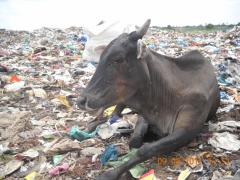
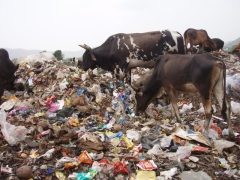
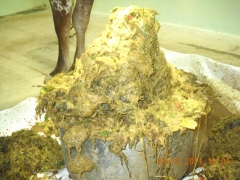
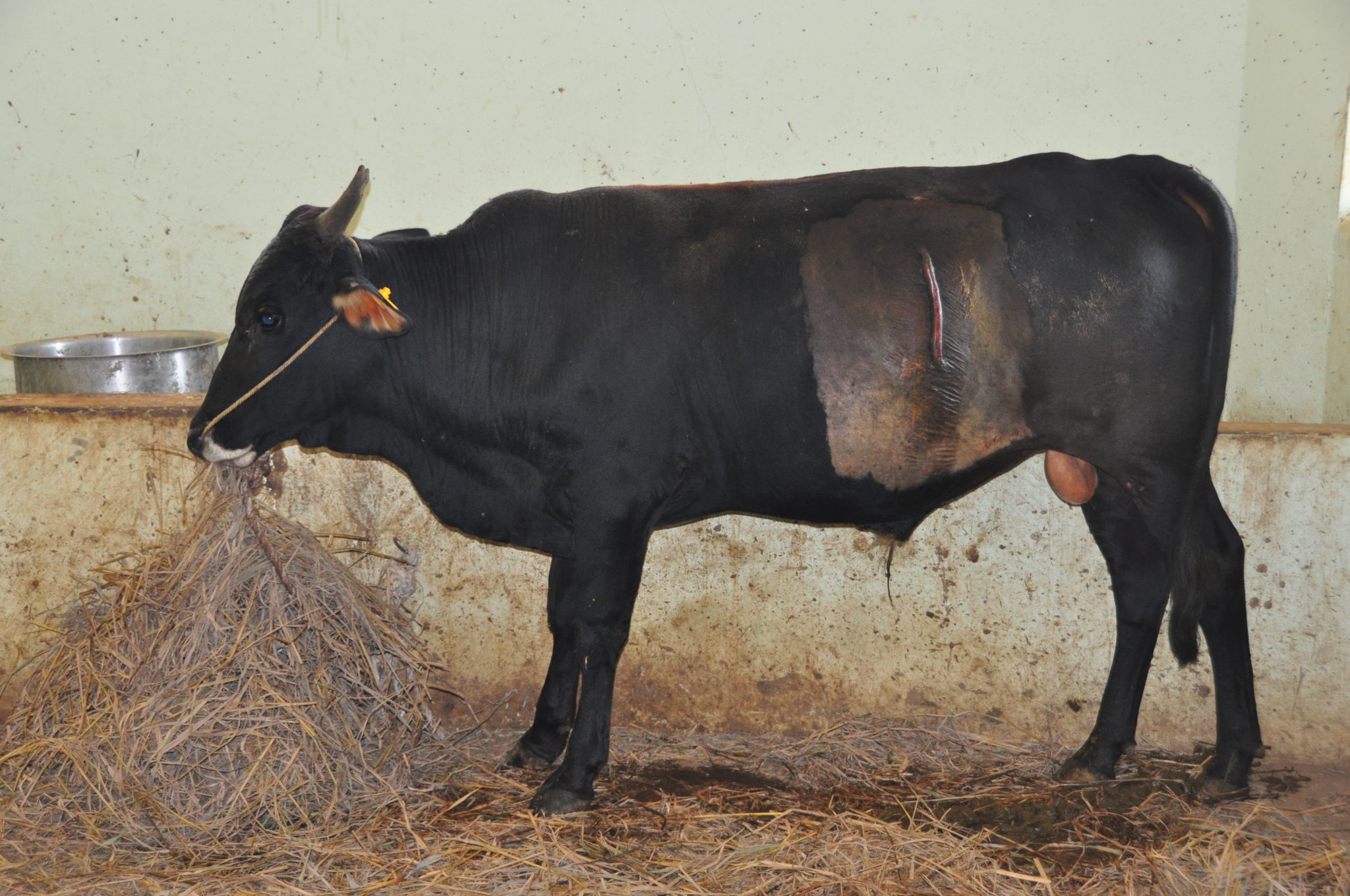
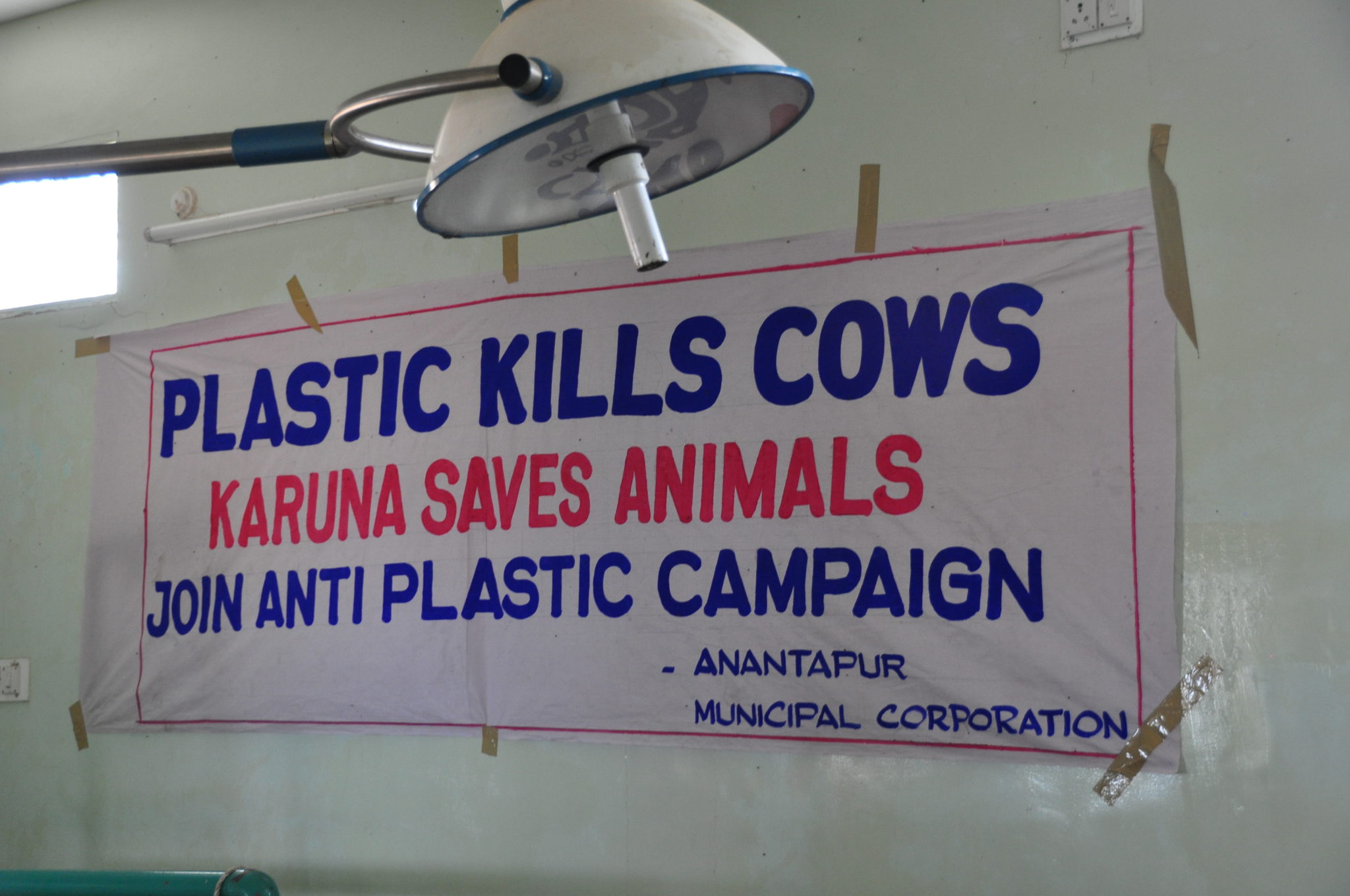
The Plastic Cow - Saving Our Mother

The Plastic Cow Project

THE PLASTIC COW

A Collective Effort to Save the Indian Cow from Plastic
UPDATE! Encouraging Court Order Dated November 18, 2014: Click HERE!

What is The Plastic Cow?

In India, one of the most striking images is the cow wandering on the road. In cities, towns and villages numerous cows and bulls sit or wander peacefully, settling down to chew the cud. It gives the impression of a society living together peacefully with animals. The holy cow, the Mother of India is revered by all and, in most states, is not allowed to be slaughtered.
India has an open garbage system, which means open garbage bins on the roads overflowing with stinking waste. Dogs, monkeys, pigs, rats and cows eat whatever they can find to survive. The numbers of stray dogs, rats and monkeys are equal to the amount of garbage on which they feed and multiply.
In cities and towns, large numbers of cows on the roads eat from garbage bins, foraging for fruit and vegetable leftovers, anything edible and smelling like food.
Since plastic bags have invaded our lives, almost all garbage and food waste is disposed in plastic bags. These bags spill out either on the road or from municipality dustbins. Since the plastic bags are knotted at the mouth, cows, unable to undo the knot, eat food leftovers including the plastic. Slowly, over time, they build up a huge amount of plastic inside their stomachs. It gets entangled with different materials and it becomes hard like cement inside their rumens, which is the first belly of the cow.
These cattle, owned or stray, often obstruct traffic and cause accidents. The municipality removes the animals from the road to be sent to go-downs, goshalas (shelters designed for cows), temples or they are simply dumped at the garbage landfills on the outskirts of the city. From there they “disappear” into trucks for transport to slaughter.

What are these cows doing on the road anyway?

There are many small “urban” dairy farms in cities and big towns. Dairy owners send their animals out on the road to forage for food as there is no green grass and little or no space to keep the animals at home. Still the owner milks his cows. These cows share the roads with abandoned calves, young and old bulls, old and dry cows. They scavenge between the garbage bins, the vegetable markets and hotels and finally end up on the municipality garbage landfills outside the town.
In places where there are cattle markets, there are more “owners”. These owners (brokers) buy the animals from farmers or cattle markets for very little money. The new “owner” simply leaves them on the road to fend for themselves. They mark the animals as their property. Whenever it suits them and the animal “looks fat”, they sell them off for a lot of money to an unsuspecting real farmer or for slaughter. When the farmer feeds the cow natural food and grass, the animal, having eaten garbage all its life, dies from indigestion and the farmer and the cow are both victims of a cruel and immoral practice.

The Holy Cow Reduced to a Dying Scavenger 

There have been anti-plastic campaigns in India. At present there is a ban on plastic bags up to 40 microns in many states. But no one has focused on the hazardous effects of plastic on the animals and their right to live a life free of plastics. It is the basic right of the cow to live and graze on natural food and not have to eat garbage tied up in plastic bags. This is an acute form of cruelty. The noble cow has become a scavenger.

Rumenotomy, the surgical removal of plastic up to 70 kg from the cow.

 
Plastics become visible
Karuna Society for Animals & Nature is based at Puttaparthi, in Andhra Pradesh (South India), 70 Kms away from Anantapur.  In December 2010, Karuna Society received 36 stray cattle from Anantapur town for permanent custody. Soon after their arrival one of the cows died. The post mortem conducted by our veterinary surgeon revealed that the animal’s rumen was full of plastic. After examination of all the animals, he advised us to start surgeries to remove plastics from their rumens to save their lives.
From the moment we received the “plastic cow” from Anantapur town, we realized that there are hundreds of cattle on the roads feeding on garbage, including plastic. They are sentenced to a slow and cruel death if they do not receive help in time. This is a cruelty most people are not aware of when they see the animals “peacefully” walking on the street. Think about big cities like Delhi, Kolkata, Chennai and Bangalore where tens of thousands of animals are walking around with their bellies full of plastic.
It has been a life changing experience for all of us who witnessed the surgery and the removal of plastics and other waste items from the rumen. We are horrified by the suffering of animals caused by the human garbage system and the problem of letting cows and bulls loose on the road.
52kg of plastic is removed from the rumen

The Unobserved Disaster – The Plastic Effect on Wildlife

Along India’s rivers, there are thousands of temples, villages and towns, where untreated sewage and garbage flows in the water. Hundreds of kilometers away, garbage and plastic are deposited at places where wildlife feeds and drinks. Many animals die a painful and unobserved death. An elephant was found dead with 750 kg plastic inside its stomach. Turtles, fish, birds, wild pigs—no animal can escape!!
Pradeep Nath from VSPCA (Visakha Society for Protection and Care of Animals), Vishakapatnam has for many years been involved in rescuing endangered turtles and other wildlife and his observation shows that many animals suffer from plastic ingestion or get entangled in plastic bags and suffocate to death.

The Plastic Cow Project

Karuna Society, having realized that all cows on Indian roads are full of plastic, wrote a “Plastic Cow” report to all our contacts including the Federation of Indian Animal Protection Organization (FIAPO) network, to find ways to stop this cruelty.  Philip Wollen of the Kindness Trust, Australia, responded immediately and he told us to continue the rumenotomies with the assurance that the Kindness Trust would fund 100 surgeries as a pilot project at the cattle hospital at Karuna Society.
The “Plastic Cow Project.” started with four people, seriously concerned about the ban on plastics and violation of animal rights.  It is a work in progress, with multiple strategies being devised to end this problem. The ‘plastic cow’ represents an icon for all animals exposed to the human garbage system.

Different Strategies

  • Surgeries on Plastic Cows
  • Public Interest Litigation
  • Plastic cow campaign including documentary and website
Surgeries on Plastic Cows

The second cow that was operated on is doing really well.
The rescue of individual plastic cows from the road by the qualified rescue centers. These animals need surgery (Rumenotomy) but they can never go back on the road or to their owners, they need lifetime care and protection. At present the surgeries are performed at the Karuna Cattle hospital Puttaparthi and at VSPCA in Vishakapatnam and at some veterinary colleges such as IPAN (India Project for Animals and Nature) in Ooty.
The general opinion about rumenotomies is that the procedure is not always successful. Many animals develop post-operative problems and die some time afterwards. Owners of plastic cows feel financially more secure if they sell the animal. There is a shortage of cattle hospitals where aseptic surgery can be performed and the veterinary surgeons lack experience which adds to the problems.
Karuna Society started with the same doubts, but after several surgeries and improvements of the procedures the success rate is high.
Performing rumenotomies is not the answer to the plastic cow, only a total ban on plastics and removal of animals from the garbage-dump will solve the problems. We continue the surgeries as it is a life-saving procedure for the individual animal. As a pilot project, funded by The Kindness Trust, Australia, it gives us more information about the problems, the surgeries and the rate of survival.
Public Interest Litigation
The Plastic Cow activists filed a case in the Supreme Court of Delhi, for animal’s rights and the complete ban of plastic bags.
M/s VSPCA, Vishakapatnam, M/s Karuna Society for Animals and Nature, Puttaparthi, and three individuals Pradeep Nath, Clementien Pauws and Rukmini Sekhar are the litigants in this case supported by Senior Lawyer for Supreme Court Shyam Divan and assisted by Pratap Venugopal.
The respondents in this case are the Central Government and all the States of India, through their Animal Husbandry Departments, including the Animal Welfare Board of India.
 While there may be a couple of cases pending asking for a total ban on plastic bags as an environmentally hazardous pollutant, this team has specifically filed it as an animal rights litigation. This is clearly a case of the state violating its own laws where the Constitution guarantees the right to life to all living beings and yet, the plastic bag issue is not being either monitored or implemented by the state. We have also asked for a better garbage disposal system where there is no interface between animals and plastic.  As the case will unfold over time, many more aspects can be brought to the attention of the Court and the public.
On May 7, 2012, the Supreme Court announced in its first hearing that it may be considering a total ban on plastic bags. This made huge national and international news.
Excerpts from the Economic Times of India
8 May, 2012, 05.10 AM IST, Dhananjay Mahapatra, TNN
Plastic bag threat more serious than atom bomb: Supreme Court
NEW DELHI: Excessive use of plastic bags and their unregulated disposal has been choking lakes, ponds and urban sewerage systems, the Supreme Court said on Monday while warning that it posed a threat more serious than the atom bomb for the next generation.
This observation from a bench of Justices GS Singhvi and S J Mukhopadhaya came on a PIL filed by two Andhra Pradesh-based NGOs drawing the court’s attention to 30-60 kg of plastic bags recovered from the stomachs of cows because of irresponsible disposal of plastic bags and defunct municipal waste collection system.
The court issued notice to the Centre and State Governments on the PIL seeking ban on use of plastic bags in municipal areas which did not have a prompt garbage collection, segregation and disposal system. The NGOs said absence of prompt garbage collection, segregation and disposal system allowed cows to rummage through garbage bins and eat foodstuff disposed of in plastic bags, which get stuck in their stomach.
But the bench wanted to address the larger questions arising from indiscriminate use of plastic bags, which not only posed a grave threat to nature and environment but also to the human race itself. It suggested that the petitioner make the manufacturers and a television channel, which has been running a campaign against use of plastic, parties to the PIL for a wider scrutiny of the important issue.
“All of us are watching how our lakes, ponds and urban sewerage systems are getting choked by plastic bags. We want to expand the scope of this petition. Unless we examine a total ban on plastic bags or put in place a system for manufacturers mandating them to collect back all plastic bags, the next generation will be threatened with something more serious than the atom bomb,” Justices Singhvi and Mukhopadhaya said.
Appearing for NGOs Karuna Society for Animal and Nature and Visakha Society for Protection and Care of Animals, senior advocate Shyam Divan said the problem was more acute in urban areas where people had a habit of disposing leftover food in plastic bags in municipal bins.
“Apart from the plastic completely choking the digestive system of the cow and causing excruciating pain to the animal, plastic residues enter the human food chain through dairy and animal products,” he added.

The petitioners sought following the directions from the court:
* Prohibit or phase out in a time-bound manner open garbage disposal system and remove open garbage receptacles
* Implement door-to-door garbage collection and prevent animals from moving around garbage storage facilities
* Municipalities must segregate all plastic waste from other waste
* States must issue directions prohibiting use, sale and disposal of plastic bags in all municipal areas
* Provide animal shelters and treat cows and other animals suffering from stomach ache due to ingestion of plastic.

The Plastic Cow Campaign
An outreach effort on National Scale is growing into an organic root level movement
The Plastic Cow Documentary
 The Plastic Cow Documentary, made by Kunal Vohra from Altair films  with inputs from activists, toxicologists, government authorities, householders, students, journalists, etc.
Philip Wollen wrote the following synopsis of the documentary:
The Plastic Cow uncovers the ghastly truth about the impact of plastic waste on the innocent Indian cow, which is now reduced to being a scavenger. The film focuses on the ubiquitous plastic bags, the exemplars of human negligence and waste, which the discarded and hungry cows consume whole for the rotting scraps of food they contain. These plastic bags, which also often contain rusty nails, wires and syringes, clog their stomachs, leading cows to die slow, painful deaths.
This unholy alliance of plastic, carelessness and negligence is not only torturing the Indian cow to death but it has also infected farming communities, rivers, forests and oceans, killing elephants, donkeys, fish, turtles and sea birds.”
The film has been seen by thousands of people in India and all around the world, on You Tube and other social networking platforms and at dozens of film screenings in various parts of the country.
The outreach program
This is envisaged as a focused campaign using the Plastic Cow documentary and intensive interactions at all levels of society – ministries,  municipalities, dairy farms and co-operations, educational institutes, veterinary doctors,  householders, children, animal organizations, women groups, media, religious groups, restaurants, the plastic industry, etc.
We need to expand into an all-India network of “plastic cow campaigners.” We hope that many people will join this campaign in large numbers from different parts of the country, creating “plastic cow chapters.” We want that all citizens of India should join this campaign to assert our sacred duty of respecting the rights of all animals to live and breathe as is their birthright.
What can you do as a campaigner? 
To screen the film is a good starting point everywhere. When people come forward, asking for advise and willing to volunteer, you can brainstorm and share ideas such as the below:
Personally:
NEVER collect your veg. peelings in a plastic bag with a knot and put them in the garbage.
When you go shopping, bring your own (plastic or cloth) bag, never depend on plastic bags from the seller, REFUSE THE BAGS THAT ARE BANNED, below 40 micron, reuse the plastic bags you already have till they are worn out and then collect them in a separate bag and give them for recycling.
If you are really touched by the film and the suffering of the cow, reconsider your food habits. Nowadays the milk and meat industry are closely connected and there is no more milk without slaughter. Even by being a vegetarian you contribute to the suffering you have just witnessed.
Inform yourself about the health benefits of living as a vegan. It is easy.
Socially:
A group of volunteers, friends, students, housewives or pensioners can go around in their neighborhood to observe the garbage disposal, the nr of small dairies and the nrs of cattle on the road. Meet with the concerned people and discuss what improvements can be made.  
Inform yourself as a group about the existing municipality laws and Government Orders regarding cattle maintenance, dairies and plastics/garbage disposal. Take the next step from there.
Try to find out where the illegal bags come from. (They are banned everywhere so why are they still produced?)
Professionally, or in the workplace:
When you are a government official in any of these areas, have the courage and voice your opinion, help the volunteers who try to change the situation. The same is for journalists, doctors, veterinarians, health inspectors, and shopkeepers. No effort is too small. Maybe the shopkeepers are a special group to canvass as they always want to satisfy the customer who has no bags with them.
Politically:
When you have enough data about your area, meet with MLAs and any concerned official and politician and build up a pressure group.
Outside the Cities:
90% of the milk produced is from rural areas and small towns. At present there are 304 million dairy cows in India (live stock census Sept. 2012).
In 2007, there were 14 million farmers, 254 milk co-operations, 177 milk unions, and 1,33,000 village level societies. Now in 2013, the numbers are much higher.
In the rural areas the “Plastic Cow Campaign” might need to have a totally different approach through the women groups, creating awareness about plastics. Many dairy cows are taken out for a few hours grazing but the growing amount of plastic and garbage is affecting them too. 
KARUNA’S ANTI-PLASTIC BAG CAMPAIGN CONTINUES
Rescued and operated cow gives birth

"A Report from Karuna Society"